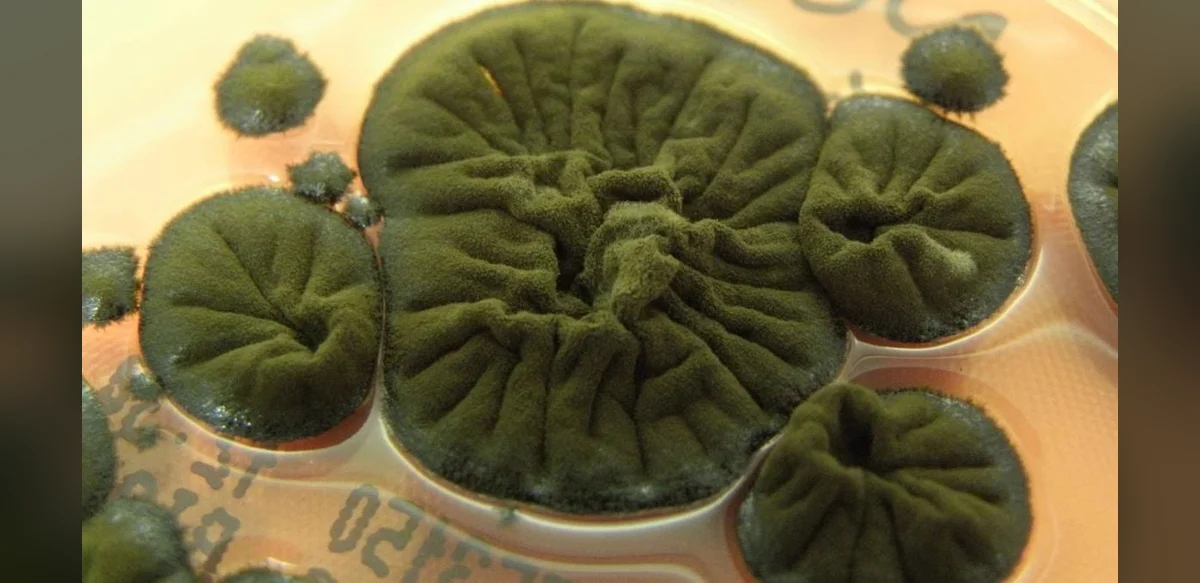
The Chernobyl exclusion zone remains restricted to people, yet some organisms appear to tolerate and even benefit from the conditions. After the reactor explosion nearly 40 years ago, various life forms have colonized the area. One fungus in particular, Cladosporium sphaerospermum, grows on walls inside highly radioactive buildings. Its dark pigment melanin may enable it to use ionizing radiation in a process resembling photosynthesis, sometimes called radiosynthesis. Researchers first noted many dark fungi species in the zone during surveys in the late 1990s. Later experiments showed the fungus resists radiation damage and grows faster when exposed. A 2008 study proposed that melanin helps convert radiation into usable energy while offering protection. Tests on the International Space Station supported its shielding potential. However, direct evidence of energy gain or carbon fixation from radiation has not been confirmed, leaving the exact mechanism unclear.