


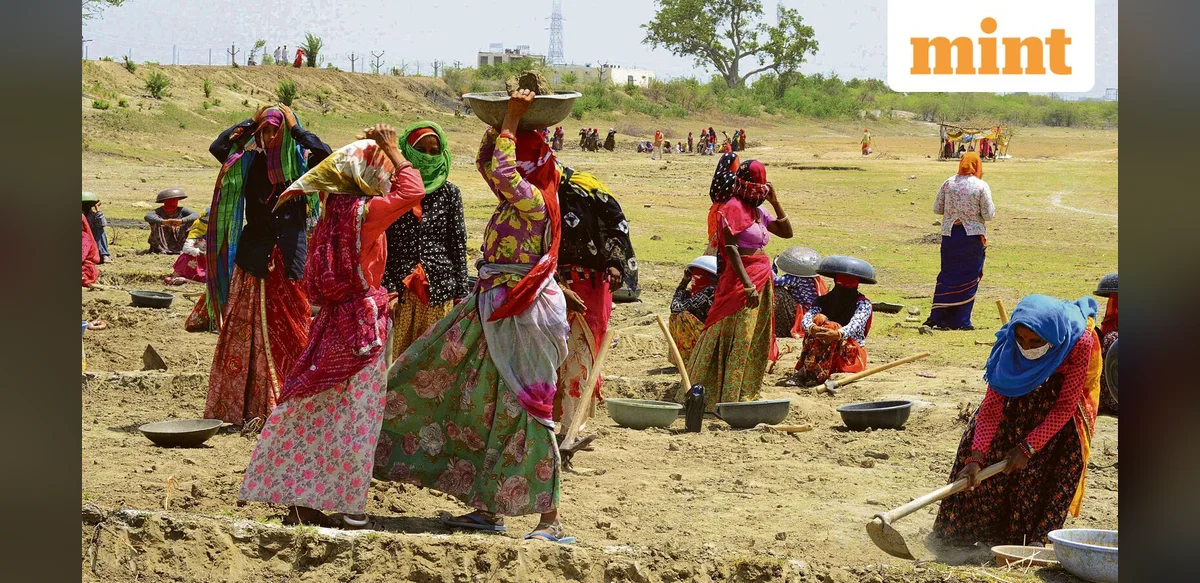
The central government has issued updated wage rates for the Viksit Bharat–Guarantee for Rozgar and Ajeevika Mission (Gramin) Act, 2025. A uniform minimum of ₹300 per day will apply to all workers in the rural employment scheme starting 1 July 2026.
The order, released with the new law, lifts pay levels in every state, union territory and wage zone. The national average wage rises to ₹327.4 daily from the previous ₹298.8, an average gain of ₹28.6 or over 10 percent.
The legislation also extends the annual job guarantee from 100 to 125 days per eligible rural household. It seeks to build lasting village assets and support the Viksit Bharat 2047 goal. The national rollout begins in Andhra Pradesh on 2 July.
A central element is the new interim floor of ₹300, so no wage falls below this level. Earlier the lowest rate was ₹241. Twenty-one states and union territories will gain directly from the benchmark.
States with historically lower wages see the largest percentage rises. Uttar Pradesh, Bihar, Jharkhand, West Bengal, Assam, Arunachal Pradesh and Himachal Pradesh receive increases of 15 to 25 percent. Arunachal Pradesh and Nagaland record the biggest jump at nearly 24.5 percent.
Higher-wage states also receive adjustments. Haryana now has the top rate at ₹409, followed by Goa at ₹406 and Kerala at ₹401. High-altitude gram panchayats in Sikkim are set at ₹450.
Rural Development and Agriculture Minister Shivraj Singh Chouhan stated the revisions aim to improve rural incomes and narrow regional gaps. Larger increases target lower-wage areas while the job guarantee expands to 125 days.
Rates were fixed using yearly indexation plus the new floor. Officials said the method offers clearer and fairer wage setting and better income protection.
The wage changes are part of the full rollout of the 2025 Act. Eligible households will receive up to 125 days of guaranteed work each year. The Centre expects higher pay and more work days to raise rural spending, support families and speed local growth.
An interim sum of ₹95,692.31 crore has been released to states and union territories for smooth rollout and timely payments. Twenty-nine states and union territories have budgeted for the scheme, and 24 have already notified their state-level rules.

