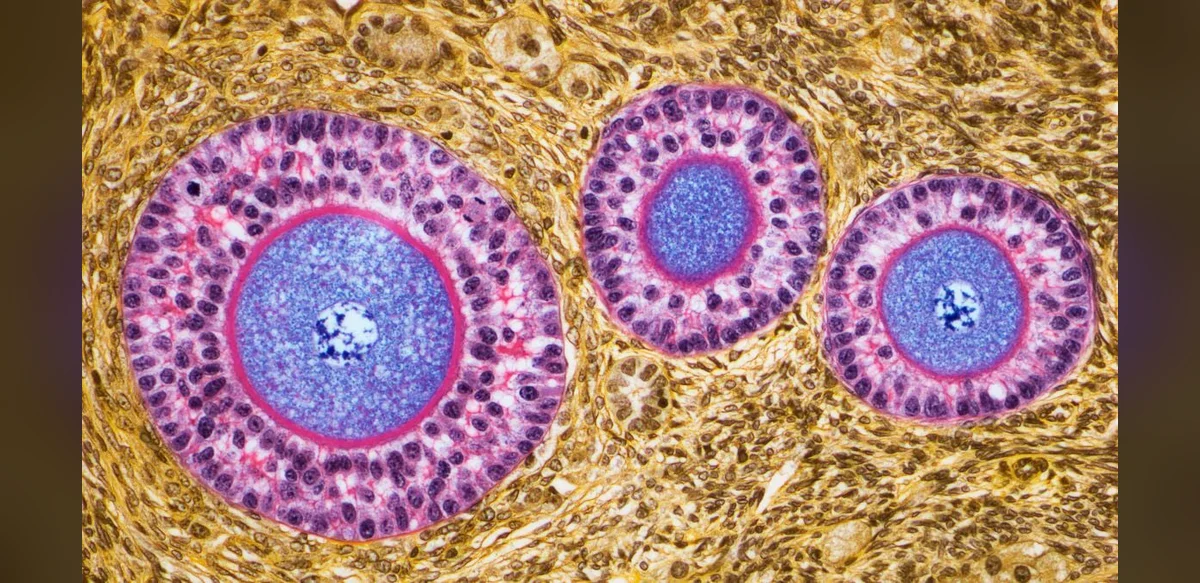
Menopause has long been viewed as the end of ovarian function, when egg release ceases. Reproductive biologist Francesca Duncan at Northwestern University questions this view and has examined ovarian activity after reproduction ends. Longer human lifespans have increased the number of post-menopausal individuals, yet their physiology remains incompletely understood. A mouse study published in Molecular Human Reproduction indicates that ovaries remain active rather than inert. Researchers analyzed ovaries from mice at ages representing different reproductive stages. One ovary from each animal underwent microscopic examination of tissue structure, while the other was subjected to RNA sequencing to assess gene activity. Results showed reduced reproductive structures with age, alongside a rise in immune-related features such as T cells and macrophages. Protein profiles from post-menopausal women displayed similar age-linked differences. The findings imply ovaries adopt an immune-oriented identity that may influence broader aging processes. The work could affect medical approaches for individuals after menopause or ovary removal.