


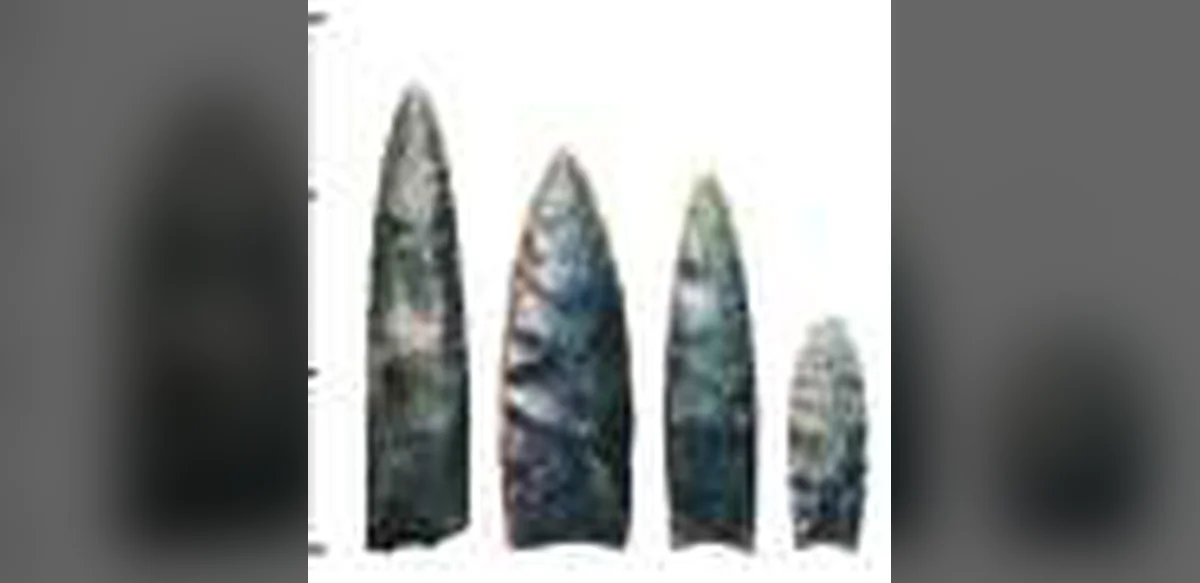
Fifteen well-documented Late Pleistocene sites in North America contain Clovis points found with remains of mammoths, mastodons and gomphotheres. Researchers have often interpreted these finds as proof that Clovis groups hunted the large animals and contributed to their extinction. A new study published in the Journal of Archaeological Science: Reports examines whether the evidence truly supports hunting or could instead reflect scavenging.
Five archaeologists from Kent State University, Southern Methodist University, the Smithsonian Institution, the University of Michigan and the University of Utah reviewed the archaeological record. They noted that scavenging occurs widely among both nonhuman animals and human societies past and present. The team also outlined the opportunities Clovis foragers would have had to obtain proboscidean carcasses.
The authors conclude that current data cannot distinguish hunting from scavenging at these sites. Therefore the record does not demonstrate that Clovis people routinely killed proboscideans or that enough kill sites exist to support a major human role in the animals’ extinction. The researchers emphasize that equifinality prevents reliable identification of either behavior from the available evidence.

