


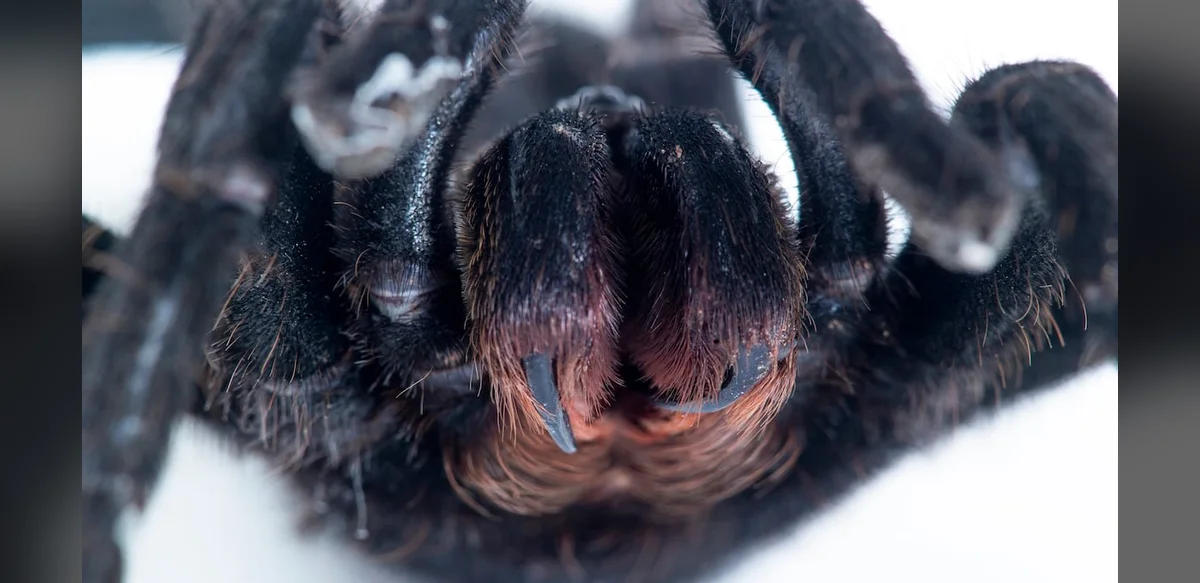
A fossil discovery in China has revealed the earliest evidence of structures that later evolved into spider fangs. The creature, named Urokodia aequalis, lived during the early Cambrian period approximately 518 million years ago.
The animal measured between two and three centimeters in length. It possessed an elongated segmented body supported by numerous small limbs, a tail resembling that of a shrimp, and a head shield with stalked eyes.
Researchers identified small paired appendages positioned behind the eyes. These structures represent an early form of chelicerae, the specialized mouthparts found in spiders, scorpions, mites, and horseshoe crabs.
The findings, published in the journal Nature, come from X-ray imaging of fossils previously collected in China. The analysis revealed soft tissues that had not been noticed in earlier examinations.
Scientists from Yunnan University and the University of Leicester conducted the study. They noted that the appendages show an intermediate stage between multi-segmented limbs and the pincer-like chelicerae seen in later species.
A related arthropod with similar features appeared in the fossil record about 14 million years after Urokodia. The new evidence indicates that the basic shape of these mouthparts originated earlier than previously documented.
Modern descendants use chelicerae in varied ways, including grasping food, piercing skin, or subduing prey. The fossil provides a direct example of how these structures may have first developed.

