


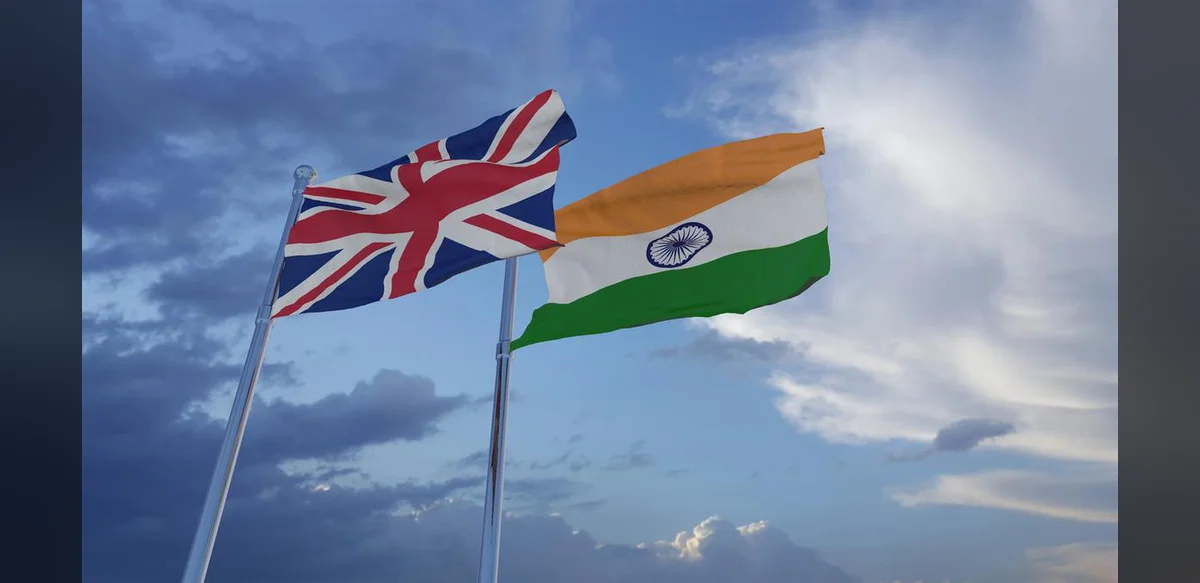
The Finance Ministry has issued regulations on determining the origin of goods under the India-UK comprehensive economic and trade agreement. The rules take effect from July 15, according to an official notice.
A certificate of origin is required for exporters to claim duty benefits under India’s trade pacts with partner nations. Establishing the origin of products prevents goods from third countries from incorrectly receiving preferential tariffs agreed between the two nations.
The Central Board of Indirect Taxes and Customs stated that authorised entities in each country may issue these certificates. The regulations are titled the Customs Tariff (Determination of Origin of Goods under Comprehensive Economic and Trade Agreement between India and the United Kingdom of Great Britain and Northern Ireland) Rules, 2026, and apply from July 15, 2026.
The agreement grants duty-free entry for 99 percent of Indian exports to the UK. It is expected to benefit labour-intensive sectors including textiles, marine products, leather, footwear, sports goods, toys, and gems and jewellery, as well as engineering goods, auto components, and organic chemicals.
Bilateral trade between India and the UK rose 8.62 percent to $25.12 billion in 2025-26, with exports at $13.44 billion and imports at $11.68 billion, compared with $23.13 billion the previous year. India recorded a trade surplus of $1.76 billion.
Experts noted that the origin rules are essential to implement the pact transparently and to ensure tariff benefits reach only qualifying goods, thereby avoiding misuse through third-country routing.

