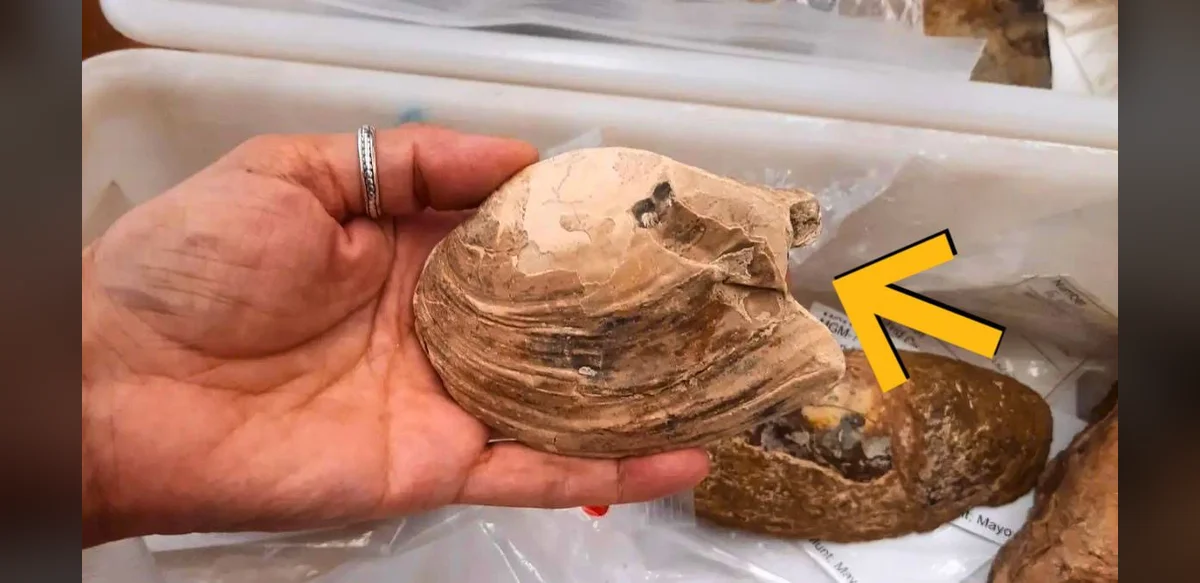
Nature has equipped mothers with diverse and unusual methods for reproduction and offspring care. Certain species, including crocodiles and sharks, reproduce without mating through a process that allows them to produce offspring independently, a trait linked to ancient lineages. Scorpion mothers transport their young on their backs, though they may occasionally consume some of them. Studying the origins of these behaviors remains difficult because soft reproductive tissues rarely survive after death. A new study in Scientific Reports presents a rare 125-million-year-old fossil of a pregnant bivalve with intact soft tissues and developing young. Researchers had long sought such a specimen. The fossil, found on the Isle of Wight in England, represents the earliest direct evidence of parental care in these shellfish. Study author Martin Munt noted that this strategy was previously known only in modern species. The fossil belongs to a large group of bivalve mollusks that includes clams, oysters, scallops, and mussels. The specimen belongs to the species Margaritifera valdensis and is related to present-day freshwater pearl mussels. These animals use a distinctive reproductive process in which males release sperm into the water for females to collect. Fertilized eggs develop in a chamber within the gills, where mothers also supply calcium. The larvae later attach to fish hosts before settling as independent mussels. Co-author Aleksandra Skawina stated that this complex strategy had already evolved by the Early Cretaceous period. The research also clarified the composition of a dark material known as molluskite, showing it consists of preserved soft tissues and reproductive structures. Co-author Rafael P. Lozano explained that minerals enabled the exceptional preservation. The findings highlight how these animals adapted to freshwater environments long ago. Today, many freshwater mussels face threats from pollution, habitat alteration, and climate change, making them among the most endangered invertebrates.