


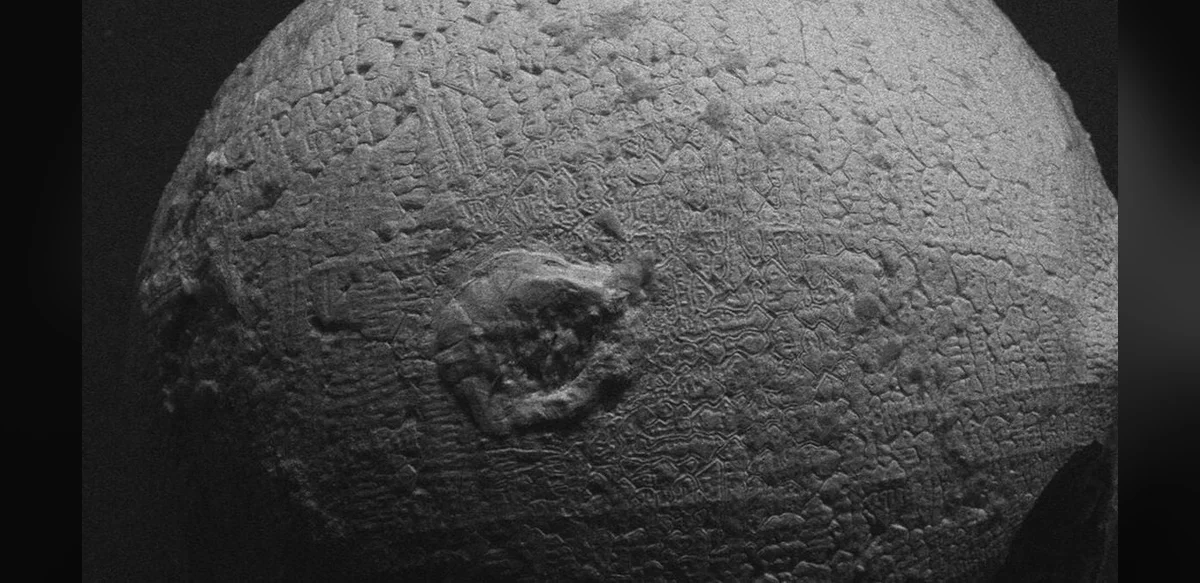
Earth receives constant impacts from space. Each year thousands of tons of micrometeorites smaller than a poppy seed fall unnoticed onto the surface. These particles originate as dust from asteroids and comets. Upon entering the atmosphere they melt into glassy spheres. Analysis of some spheres has revealed chemical signatures from an asteroid type never previously recorded in meteorite collections.
Scientists describe the parent body as missing because no matching samples exist among known meteorites. The study indicates that micrometeorites may preserve evidence of extraterrestrial material absent from standard collections. Cosmochemist Matthias Van Ginneken noted the potential of this cosmic dust for future research.
Micrometeorites record changes in Earth’s space environment over time. They also provide information on the composition of near-Earth objects without requiring spacecraft missions. The new findings suggest at least one asteroid has supplied dust to Earth for more than a million years.
Earlier studies identified unusual oxygen isotope ratios in Antarctic micrometeorites labeled Group 4. Additional observations showed olivine crystals concentrated on one side of certain particles. When examined together these traits overlapped strongly, pointing to a single unusual source. The particles also lacked magnetite and contained high sulfur levels. Researchers named the group SCumPo.
The combined characteristics indicate the parent asteroid experienced very reducing conditions. This discovery expands understanding of asteroid diversity in near-Earth space.

