


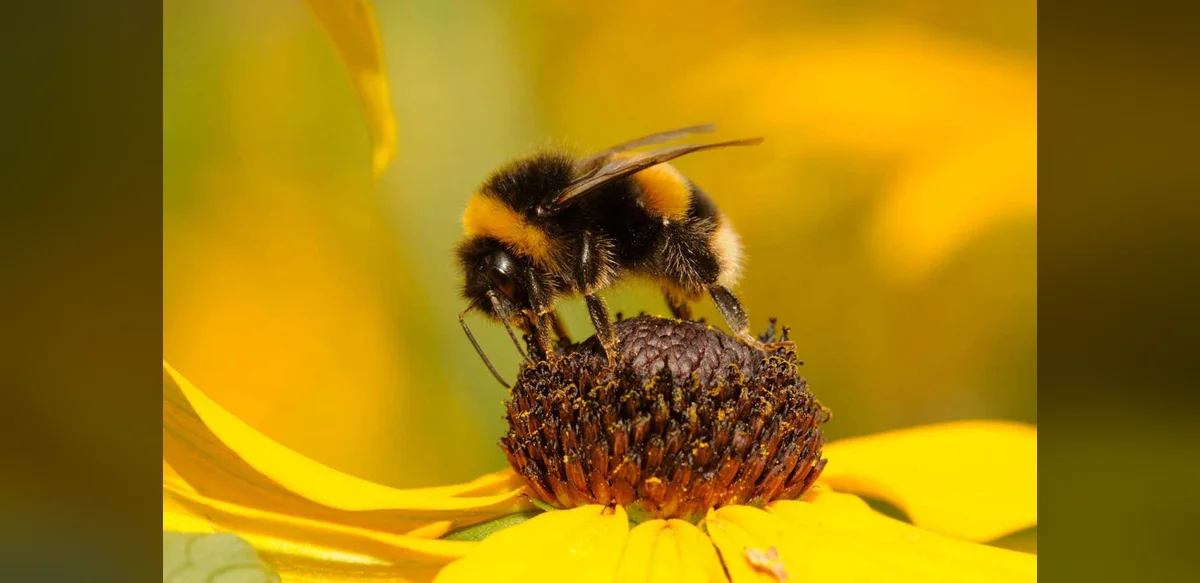
Experiments reveal that bees react differently to tastes based on their internal conditions, suggesting they may experience states similar to emotions.
Bumblebees seem to display pleasure when tasting something they enjoy, rather than merely responding to a need. This provides one of the clearest indications yet that insects possess subjective experiences.
Recent studies have shown bees can perform complex tasks such as counting and sensing rhythm. Determining whether they have emotional-like inner states remains challenging, as insects lack the facial muscles mammals use to express feelings.
Researchers at Macquarie University sought behavioral indicators in insects with rigid bodies and fixed facial structures. They conducted tests with buff-tailed bumblebees.
Bees were offered droplets of sugar water, salt, and quinine while being recorded on high-resolution video. After sugar, they extended their tongues repeatedly. After salt or quinine, they wiped their mouths and shook their heads.
These actions might reflect chemical responses rather than enjoyment or aversion. When sugar concentration was lowered and mixed with salt, tongue extensions dropped sharply. Dehydrated bees at higher temperatures then showed increased tongue extensions toward salty droplets.
This pattern indicates that internal state alters how bees evaluate tastes, similar to how thirst changes perception of an electrolyte drink in humans.
Further tests involved dopamine and endocannabinoids. Dopamine increased food-seeking without raising tongue extensions, while endocannabinoids boosted the extensions linked to liking.
The findings suggest bees evaluate and experience their environment rather than acting purely on fixed programming. Experts note the study separates wanting from liking in insects and provides innovative evidence on a complex subject, though it may reflect bee-specific rather than mammalian emotions.

