


Archaeologists have interpreted a 1,700-year-old inscription found at a Roman temple in Turkey. The text offers written evidence of the shift from Mithraism to Christianity in the Roman era.
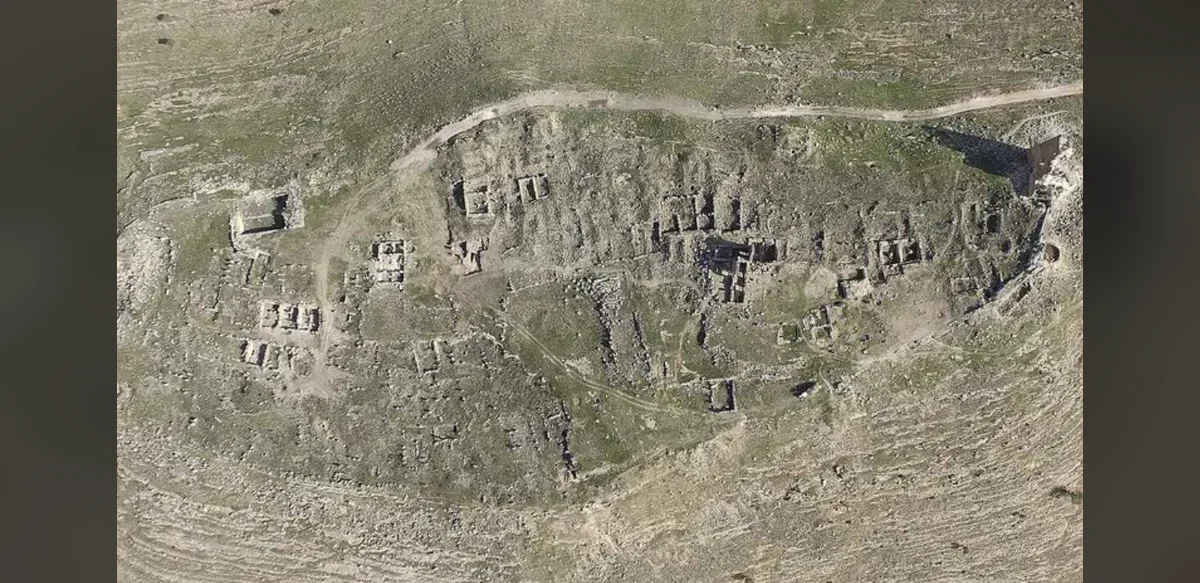
The engraving, discovered at an underground Mithras temple inside Zerzevan Castle roughly 40 miles from the Syrian border, was written in Aramaic. It was uncovered in 2017 but only recently deciphered. Researchers describe it as the first known Aramaic text recording the closure of a Mithras temple.
Carved at the entrance next to a cross symbol, the inscription refers to both Mithras and Jesus Christ along with the Holy Cross. The temple honored Mithras, the central figure in Mithraism, a mystery religion tied to light and cosmic order that spread widely across the Roman Empire in the second and third centuries.
The Zerzevan sanctuary ranks among the best-preserved Mithras temples from that time. Professor Mehmet Sait Toprak of Mardin Artuklu University dated the text to the third or fourth century by comparing its language and script with other Aramaic and Old Syriac inscriptions.
Earlier coin finds had already pointed to abandonment of the site in the third or fourth century. The inscription supplies direct proof that Christians closed and symbolically sealed the temple after emperors endorsed Christianity and began regarding Mithraism as a rival faith.
The discovery adds to recent early Christian finds across Turkey, including a fifth-century church at ancient Olympus and a former Roman hospital turned sanctuary at Kaunos.

