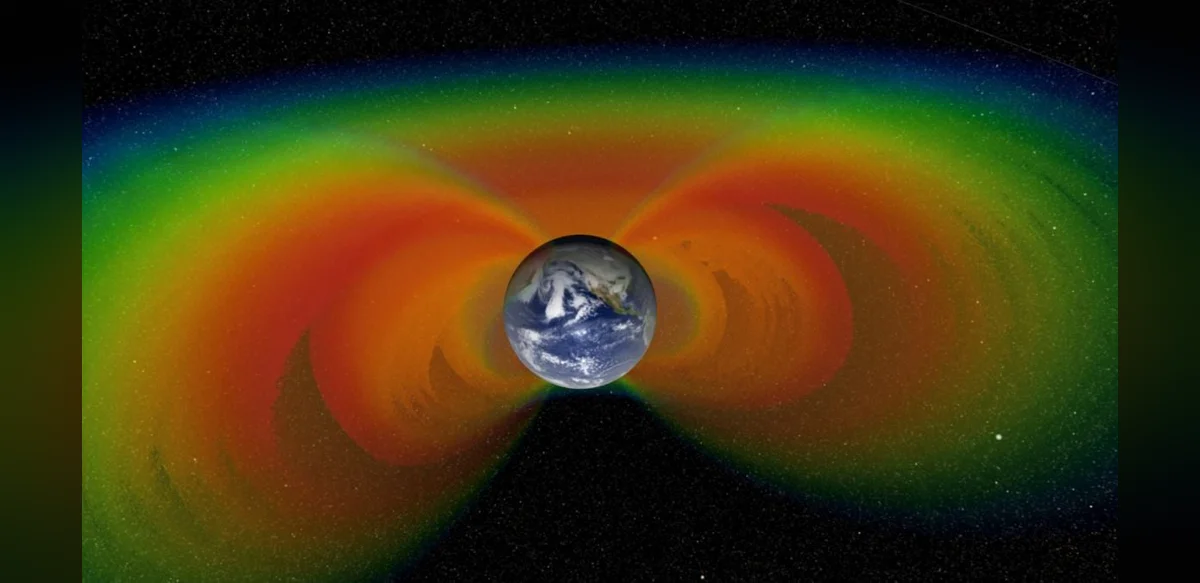
Earth is surrounded by the Van Allen radiation belts, zones of high-energy particles trapped by the planet’s magnetic field and often moving near light speed. These particles are usually viewed as hazards for satellites and space missions. Nuclear physicist Areg Danagoulian of MIT suggests they could instead help identify nuclear weapons placed in orbit. He notes that protons in the belts can trigger neutron spallation when striking uranium, releasing detectable neutrons. The idea, outlined in a Nature paper, builds on past high-altitude nuclear tests and the 1967 Outer Space Treaty banning such weapons. Current verification methods are lacking. Danagoulian’s concept uses existing neutron detection technology but faces challenges in orbit selection, particle discrimination, and engineering. The work remains a feasibility study, with further development needed for a practical monitoring system.