


Ayurveda suggests that the optimal monsoon diet consists of warm, freshly prepared, light meals that are simple to digest. Examples include khichdi, lentils, broths, steamed produce, ginger infusions, cumin drinks, and fruits in season. Such choices help maintain digestive strength, ease digestion, stabilize bodily energies, address excess heat, and bolster resistance during this period.
The rainy season offers respite from summer warmth yet introduces moisture, damp conditions, illness risks, reduced digestive power, and concerns over food safety. In traditional Indian medicine, this time is called Varsha Ritu, when the body’s digestive capacity weakens.
Ayurveda therefore advises adjusting intake during rains. Rather than dense, chilled, leftover, oily, or uncooked items, emphasis moves toward heated prepared dishes, spices that aid digestion, boiled liquids, plant-based drinks, lighter cereals, broths, and basic preparations such as khichdi.
The principle remains straightforward: select items that are recent, heated, light, and readily processed by the body.
Summary of Ayurvedic Monsoon Eating Advice
Monsoon Reduces Digestive Capacity: Traditional texts note that digestive fire diminishes in Varsha Ritu, requiring meals that are heated, recent, light, and simple to process.
Preferred Items Are Basic and Prepared: Khichdi, green gram lentils, broths, steamed vegetables, grains, millet gruel, ginger drinks, cumin water, and seasonal fruits work well.
Steer Clear of Dense or Unsafe Items: Vendor snacks, spoiled food, uncooked salads, chilled beverages, excess yogurt in evenings, fried treats, and questionable seafood may upset digestion.
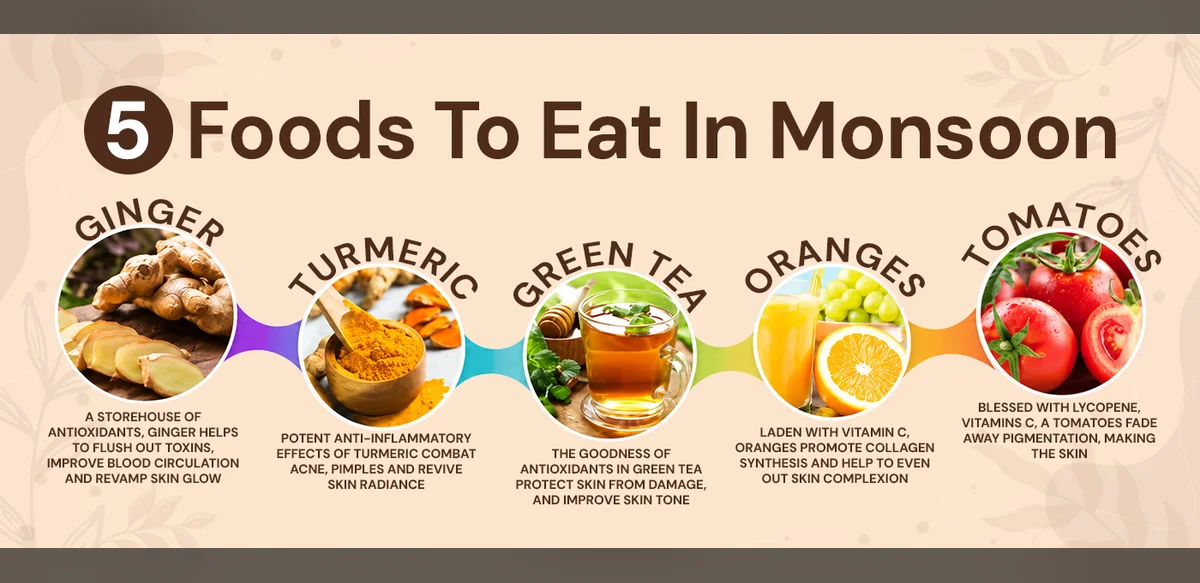
Spices That Aid Digestion Support Strength: Ginger, cumin, turmeric, black pepper, carom seeds, coriander, cinnamon, and garlic can assist digestion and seasonal resistance when used in moderation.
Maintain Clean Habits: Consume boiled or heated water, eat on schedule, prevent overconsumption, keep evening meals light, and favor freshly made dishes instead of leftovers.
Reasons Ayurveda Suggests Altered Intake in Monsoon
Ayurveda recommends changes because digestion weakens, one energy type rises, another begins to build, and resistance may decline. Warm, light, recently cooked foods help preserve digestive capacity and promote seasonal equilibrium.
Seasonal adjustment of diet and habits is termed Ritucharya. During rains the external surroundings turn moist and heavy, influencing the body similarly.
Digestive fire lessens. When it is reduced, even nutritious food may seem heavy, leading to bloating, lethargy, drowsiness after eating, or greater likelihood of indigestion.
Traditional medicine also indicates that one bodily energy increases in the wet season, potentially causing gas, bloating, uneven digestion, aches, dryness, and unease. Meanwhile another energy starts to accumulate, which could later appear as acidity, skin problems, warmth, or irritation.
Hence Ayurvedic nutrition in monsoon centers on strengthening digestion, supporting resistance, avoiding tainted or old food, easing one energy imbalance, and managing the other accumulation through fresh warm meals and digestive herbs.
An effective Ayurvedic approach in monsoon is not about reduced portions but about informed choices.
Recommended Foods During Monsoon per Ayurveda
Ideal items are warm, recently cooked, light, and easy to digest such as khichdi, green gram lentils, vegetable broths, steamed produce, rice, ginger tea, cumin water, and seasonal fruits including pomegranate, apple, pear, jamun, and papaya.
Monsoon meals should comfort without heaviness. Fried snacks may appeal in wet weather but can impair digestion if frequent. Ayurveda favors simple heated prepared foods that sustain digestive capacity.
Heated and Freshly Prepared Meals
Warm dishes digest more readily in the rainy season. Recently cooked food is also safer as items spoil quicker in humid conditions.
Suitable choices include khichdi, green gram lentils, vegetable broths, steamed vegetables, rice, lentil-rice mixes, millet porridge, and lightly spiced vegetable stew.
Khichdi ranks among top monsoon foods as it is warm, soft, nourishing, and easy to digest. Green gram lentils prove especially helpful because they are lighter than many other pulses.
Foods That Support Resistance in Ayurveda
During monsoon resistance may feel lower since digestion weakens and infection chances rise. Traditional spices and herbs can be incorporated into regular meals to aid resistance.

