


In times when weddings often feature lavish venues, expensive vehicles and lavish events, one ceremony in Jharkhand delivered a clear message against dowry and wasteful spending.
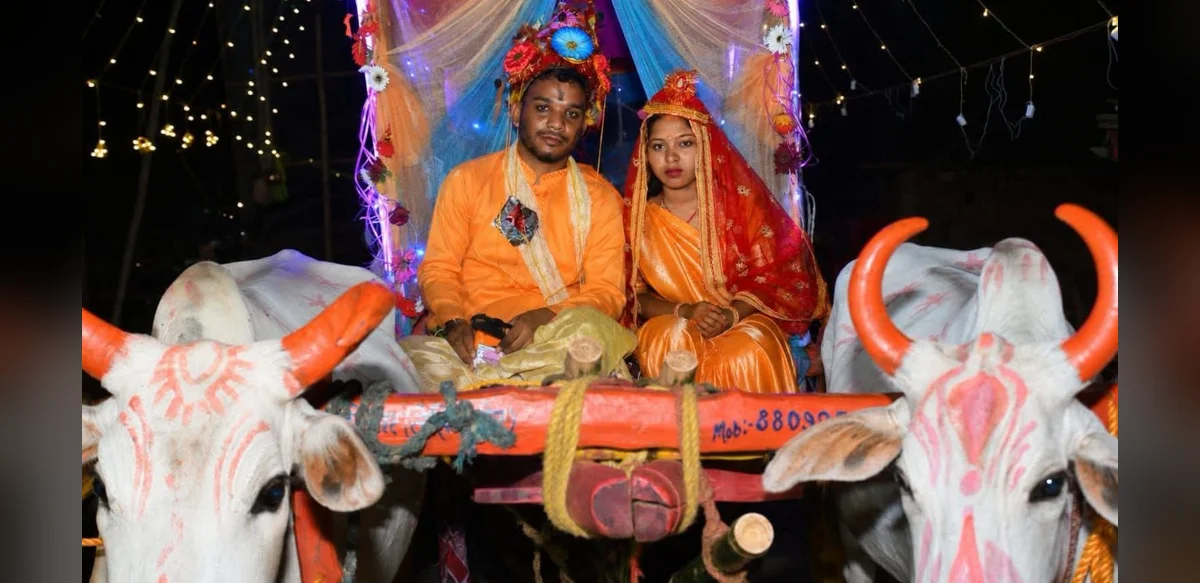
Janardan Kumar Mahto from Teliadih Tangtona village in Bokaro district reached his wedding on a bullock cart instead of a decorated vehicle or motorcade.
The marriage to Shweta Kumari from Mungo Bagda village took place without any dowry. His choice of transport drew notice as both a nod to older customs and a stand against dowry demands.
The cart served as the focal point throughout. After the main rites, the bride’s departure also used the same cart to maintain the modest tone.
The procession avoided contemporary elements such as recorded music or elaborate displays. Traditional Kudmali songs filled the air while guests walked, joined by a local horse dance performance.
All ceremonies followed Kudmali practices. This ethnic group lives mainly across the Chota Nagpur plateau in Jharkhand, West Bengal, Odisha and Bihar.
Villagers helped realise the plan. Mithilesh Mahato from Manjura village painted the cart, and Bhubaneswar Mahato from Dumarkudar village along with others added traditional Kudmali decorations.
The families viewed the event as both a wedding and an effort to restore local traditions while rejecting dowry and excessive spending.
The Bokaro ceremony has since gained notice for its restraint, showing that meaningful celebrations can rest on customs and respect rather than material display.

