


Christopher Nolan’s take on Homer’s The Odyssey was planned as a grand production, with its size clearest in the statistics: a 172-minute runtime, 91 shooting days, six nations and a reported $250 million budget.
The film runs 172 minutes, making it one of Nolan’s longer works yet shorter than his 180-minute Oppenheimer.
Principal photography occurred in Greece, Italy, Morocco, Iceland, Scotland and the United States. Though 100 days had been planned, shooting ended after 91 days, ahead of schedule. Nolan noted that returns diminish after 100 days and that favorable weather helped finish early.
Authenticity mattered greatly. Nolan wanted scenes such as a crew sailing a boat through a storm to feel nearly documentary-like.
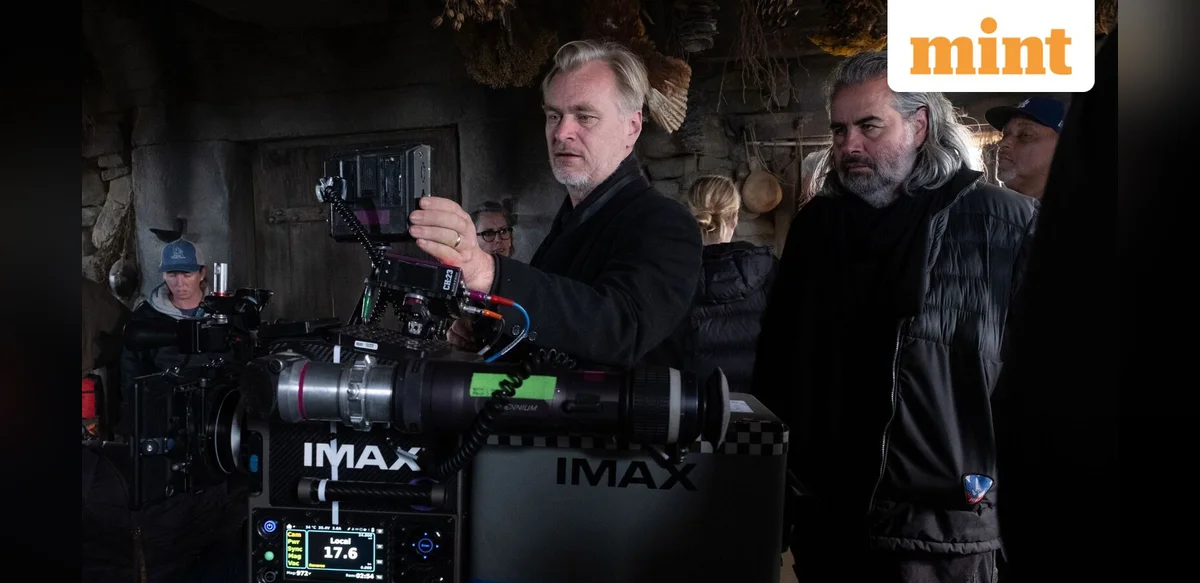
About 2.1 million feet of IMAX film were exposed, more than the distance from Toronto to New York. Shooting on IMAX 70mm lets the screen vanish and creates a 3D effect without glasses. Each roll allowed only 2.5 to 3 minutes of footage, and the camera with its housing weighed roughly 300 pounds.
Costume designer Ellen Mirojnick supervised 5,300 costumes made by 175 artisans in Los Angeles and over 500 craftspeople elsewhere. Battle scenes used about 2,000 extras for the siege of Troy and multiple 35-foot Trojan Horses.
Filming in Ithaca involved a daily 45-minute uphill walk to Castello di Santa Caterina. Some actors trained at a rowing camp to handle a 115-foot Viking longship standing in for Odysseus’ vessel.
Composer Ludwig Göransson used 35 bronze gongs plus ancient instruments such as the aulos and lyre. The production filmed inside Greece’s Nestor’s Cave for the Cyclops sequence, drawing on a Goya painting for the creature’s look.
The cast includes four Academy Award winners and the source poem has 12,109 lines. With its $250 million budget and IMAX 70mm release limited to 32 North American sites, the film ranks among Nolan’s largest and most technically demanding projects.


