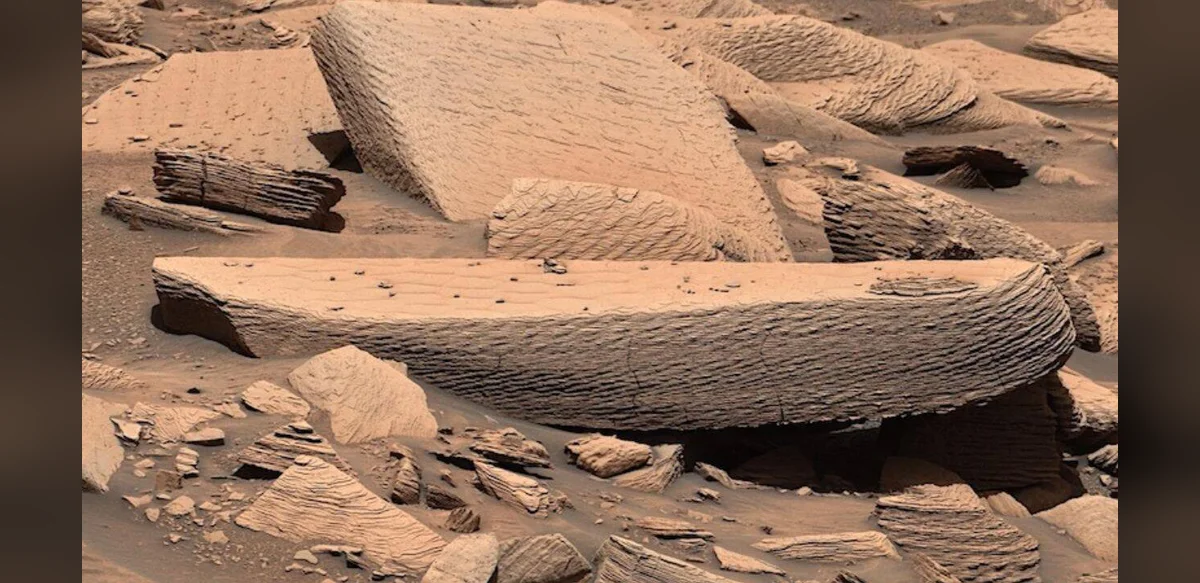
NASA’s Curiosity rover identified signs of an ancient sandstorm on Mars while exploring Gale Crater. The discovery occurred by chance in December 2024 in an area called Jawbone Canyon. What appeared as ordinary fractured slabs of sedimentary rock revealed delicate ripple-like layers upon closer inspection. Researchers recognized these as climbing wind ripple strata, formed when fast-moving sand ripples advanced while new sand settled on top. This marks the first recognition of such structures on Mars, preserving evidence of a sandstorm that likely lasted several hours billions of years ago. The findings were published in the journal Geology on March 27, 2026. Unlike most Martian layers that record conditions over long periods, these ripples capture an event lasting only hours. The structures require a denser atmosphere than exists on Mars today, indicating stronger winds around 3.5 billion years ago. Lead author Steven Banham noted this provides the first definitive evidence of such a sandstorm. The layers record brief gusts of minutes alongside a larger storm lasting hours. The team had not targeted these deposits but noticed unusual textures in panoramic images. The find adds to evidence of rivers and lakes once present in Gale Crater, suggesting a warmer, wetter early Mars. Researchers hope future observations may locate preserved raindrop marks.