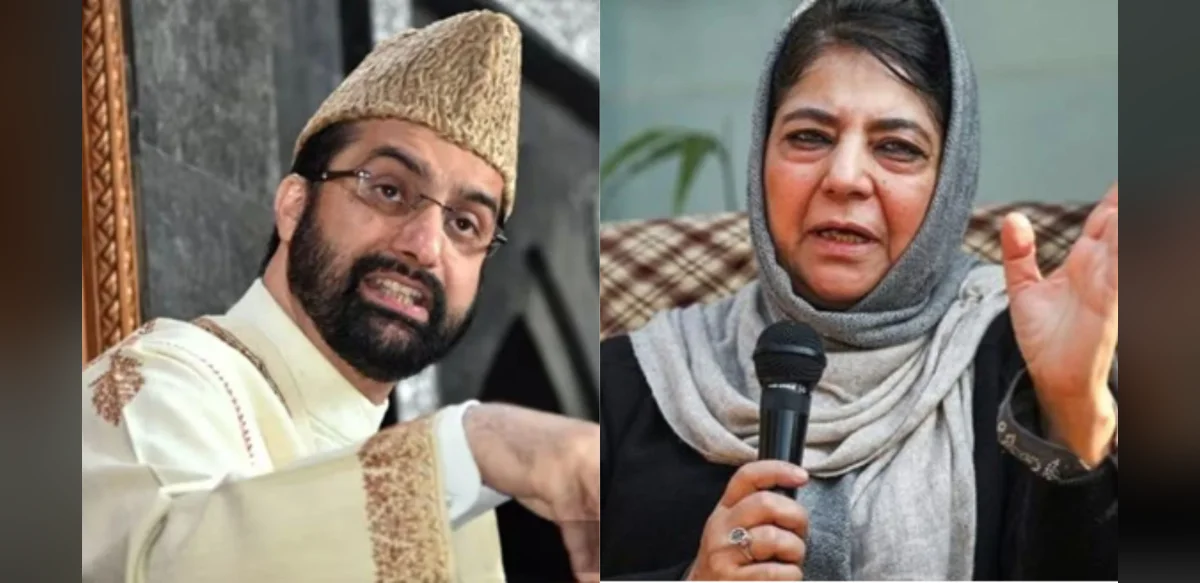
Twenty-five years after the Agra Summit failed to resolve the Kashmir issue between India and Pakistan, regional leaders argue that talks remain essential despite heightened tensions. The 2019 revocation of Jammu and Kashmir’s special status has altered local politics, while bilateral hostility has reduced dialogue prospects to near zero. Yet politicians in the valley maintain that negotiation offers the sole path forward. Mirwaiz Umar Farooq, who met Pakistan’s then-president Pervez Musharraf ahead of the 2001 summit, recalls the resulting controversy in Delhi. He later toured Indian cities, including Kolkata and Hyderabad, to clarify the Hurriyat position and introduced the phrase “triangular talks” to emphasize Kashmiri inclusion without demanding a seat at the initial bilateral table. He notes that earlier accords such as Shimla and Tashkent collapsed partly because local voices were absent. PDP president Mehbooba Mufti recalls the optimism surrounding the summit, when aligned leadership in New Delhi, Srinagar and Islamabad appeared ready for progress. Veteran CPI-M figure M Y Tarigami, who attended independently, sees little near-term chance of engagement given deep mistrust following the status change. Mirwaiz nevertheless points to the current ceasefire along the Line of Control as an improvement over the frequent shelling of 2001, though incidents such as the Pahalgam attack remain setbacks. Both the Srinagar-Muzaffarabad bus service and cross-LoC trade, launched after the summit, have stayed closed since the 2019 Pulwama attack.