


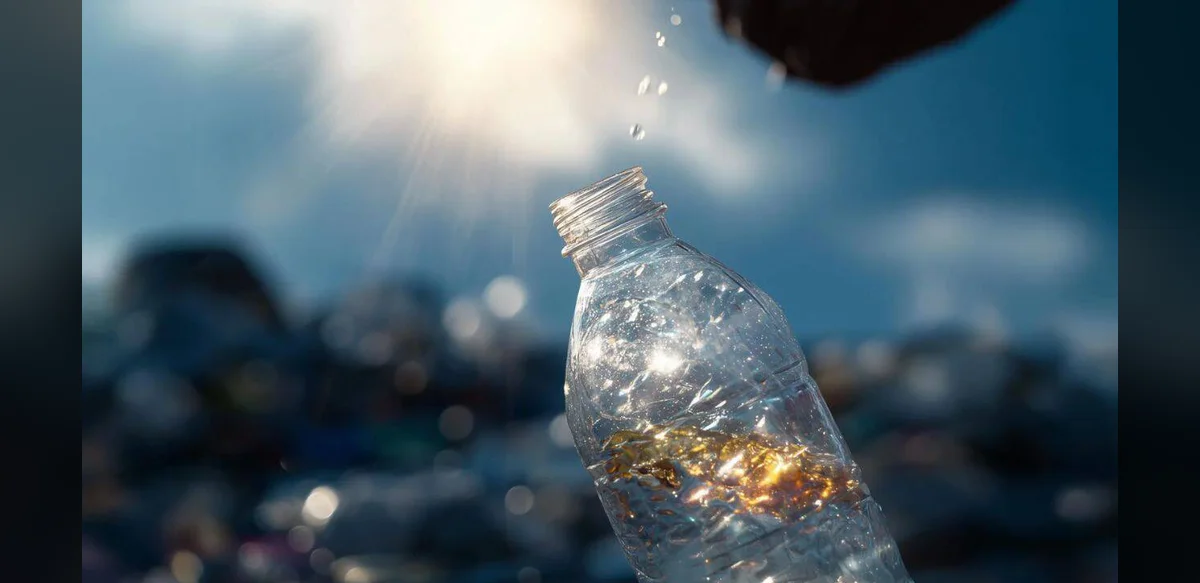
A new process converts mixed plastic waste into clean hydrogen fuel without requiring costly sorting, potentially changing recycling methods. Researchers from UCLA and Ewha Womans University developed an alkaline thermal treatment that uses heat and sodium hydroxide to break plastics down at the molecular level. The method releases high-purity hydrogen, which produces only water vapor when used as fuel.
Traditional recycling struggles because different plastics such as PET, PE and PP cannot be processed together efficiently. Contamination from food, adhesives and dyes makes separation expensive, resulting in most waste going to landfills or being burned. The new technique adds a pre-treatment step with mild heat and air to make mixed plastics decompose together at lower temperatures.
Carbon from the plastics is captured as solid sodium carbonate instead of being released as carbon dioxide. This mineral can be converted into calcium carbonate for construction use. The study published in PNAS shows the approach works on common household plastics and avoids greenhouse gas emissions during the reaction.
Global plastic production exceeds 460 million tonnes yearly, with less than 10 percent recycled. The process could turn waste into an energy source while reducing pollution from both plastics and fossil fuels.

