


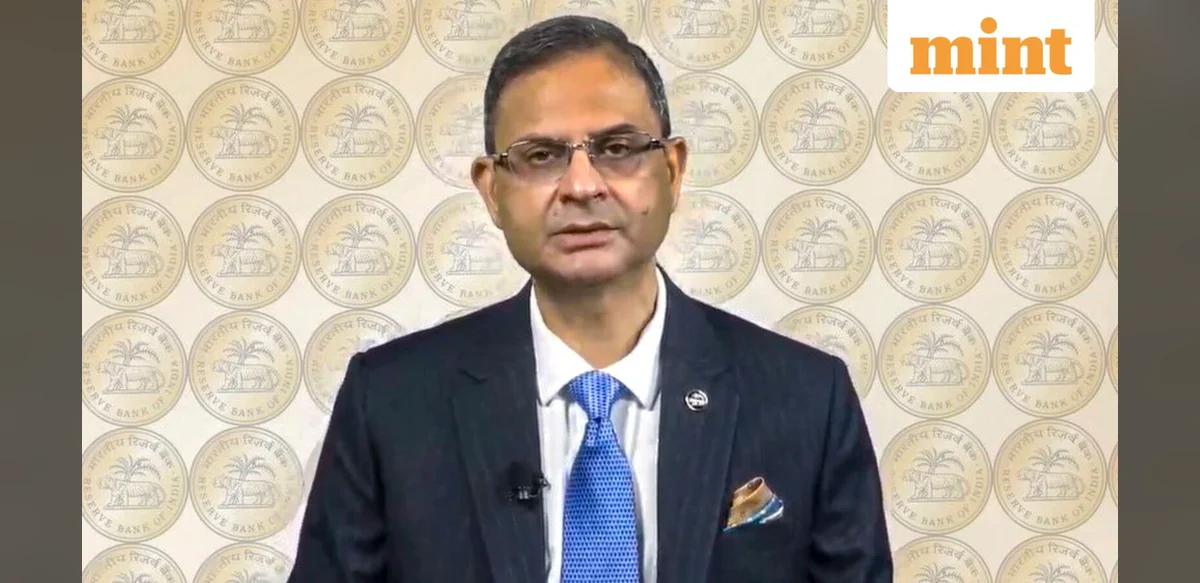
Mumbai: Reserve Bank of India governor Sanjay Malhotra stated on Wednesday that the nation’s balance of payments is projected to show a solid surplus in the ongoing fiscal year. This outlook reflects the impact of central bank actions taken in June to draw foreign capital, such as eased rules for foreign currency non-resident bank deposits.
“Steps on capital flows taken in June have aided inflows. Consequently, the balance of payments should post a healthy surplus this year,” Malhotra noted during the bi-monthly policy announcement.
The remarks represent the clearest signal yet that the June package aimed at boosting foreign exchange inflows is aiding India’s external position amid global trade issues and market swings.
Capital inflows via FCNR(B), external commercial borrowings and overseas foreign-currency loans have exceeded expectations. Within 53 days, $40.8 billion was raised, with FCNR(B) deposits making up 90 percent.
The plan to encourage dollar deposits in domestic banks has received strong uptake. The updated FCNR scheme permits non-resident Indians to place leveraged or unlevered deposits, with the RBI taking on hedging risk to provide potential high returns. FCNR accounts let NRIs hold foreign-currency fixed deposits in India. Announced at the prior policy meeting on 5 June and launched three days later, the scheme runs until end-September.
India’s BoP surplus for FY27 is now seen at $40 billion, raised from a prior $25 billion forecast. The current account deficit is projected at 1.7 percent of GDP, per an IDFC FIRST Bank report from 3 August.
The surplus assumes the RBI lets existing buy-sell swaps mature and replaces them with longer-term swaps under FCNR(B), ECB and overseas foreign-currency borrowings.
“The BoP surplus will support rupee stability and let monetary policy focus on domestic growth and inflation. A stronger foreign exchange reserve buffer will help the RBI curb rupee depreciation during heightened geopolitical tensions,” the report stated.
Persistent rupee depreciation pressure since last year has led importers to hedge more and exporters to hedge less, increasing dollar demand. Greater rupee stability should encourage exporter hedging, the report added.
Malhotra noted that India’s external sector has stayed resilient despite a tougher global setting. “Even in a challenging global environment, the current account deficit in 2025-26 stayed modest and well below sustainable levels for emerging markets,” he said.
Looking ahead, the governor warned that slower global trade growth, higher energy prices and ongoing trade policy uncertainty could raise the current account deficit in 2026-27. These risks are expected to be offset by the India-UK trade agreement, other recent deals, strong services exports and solid remittances.
On the capital account, gross foreign direct investment inflows rose to $30.7 billion in April-June 2026 from $26.7 billion a year earlier, showing continued investor confidence. Net FDI also increased as gross inflows grew while outward FDI slowed.
Foreign portfolio investment flows turned positive in June and July, with net inflows of $7.1 billion, mainly into debt, after outflows in April and May.
Malhotra added that India’s foreign exchange reserves remain adequate, offering more than 10 months of import cover and covering 90.8 percent of external debt.

