

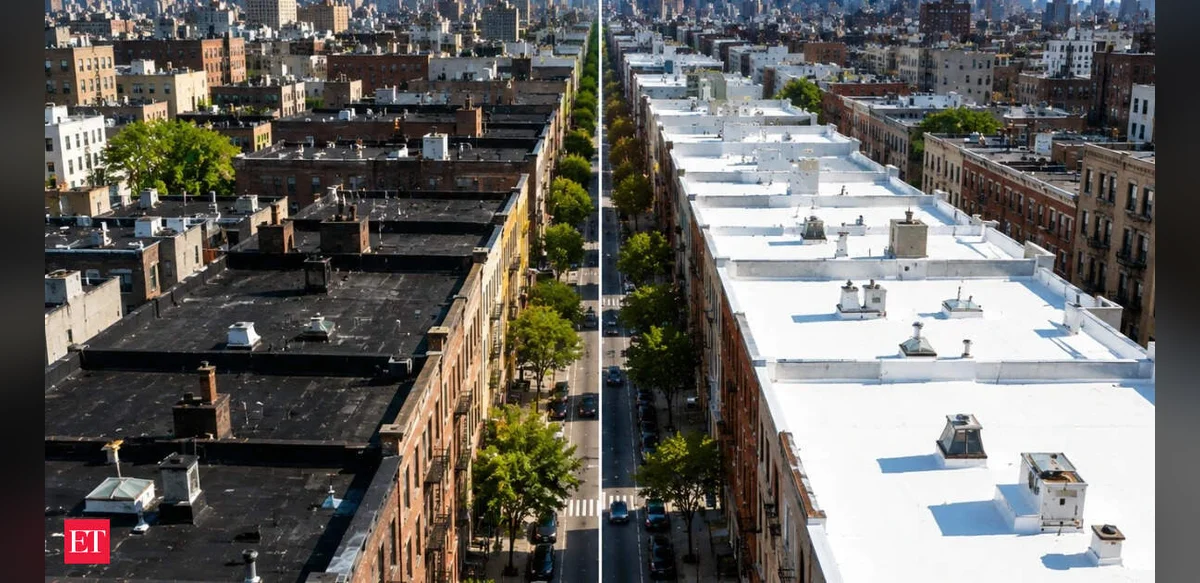
Beginning in 2011, New York City launched a volunteer-driven program aimed at addressing rising urban temperatures during summer months. Participants applied white coatings to building rooftops across various neighborhoods. The method was intended to reflect more sunlight away from structures rather than allowing dark surfaces to absorb heat.
This approach led to noticeable reductions in the amount of solar energy retained by buildings. As a result, indoor spaces experienced lower temperatures without additional energy use for cooling. Residents reported more comfortable living conditions during peak heat periods, particularly in areas with limited access to air conditioning.
Urban environments often face elevated temperatures compared to surrounding rural zones due to dense construction materials and limited vegetation. The white roof application sought to mitigate one aspect of this effect by altering surface reflectivity. Studies conducted after the initial rollout indicated measurable drops in rooftop temperatures on treated buildings.
Volunteers worked in teams to prepare surfaces and apply the specialized paint. The process required minimal equipment and could be completed on many flat or low-slope roofs common in the city. Coordination with building owners ensured safe access and proper timing to avoid disruptions.
Over subsequent years, the initiative expanded to include more structures. Data collected from participating sites showed consistent patterns of heat reduction. This contributed to broader discussions on sustainable methods for managing city climates without relying solely on mechanical systems.
The program highlighted how simple surface modifications can influence local environmental conditions. By focusing on reflectivity, the effort complemented other strategies such as increasing green spaces and improving insulation standards. Officials monitored outcomes to assess long-term impacts on energy consumption and public health during heat waves.
Similar techniques have been explored in other cities facing comparable challenges with summer heat. New York’s experience provided practical insights into implementation at scale, including material selection and maintenance needs. The white coatings generally required periodic reapplication to maintain effectiveness.
Community involvement played a key role in the project’s reach. Local groups organized painting events that also raised awareness about urban heat management. Participants learned about the science behind reflective surfaces and their potential benefits for reducing overall city temperatures.
The initiative remained focused on voluntary participation and low-cost materials. It avoided mandates or large-scale infrastructure changes, making it accessible for a wide range of buildings. Follow-up evaluations confirmed that the core goal of lowering heat absorption was achieved across diverse rooftop types.
As cities continue to address rising temperatures linked to climate patterns, reflective roof programs offer one tool among several options. New York’s early adoption demonstrated feasibility in a dense metropolitan area with varied building stock. Ongoing observations help refine best practices for similar efforts elsewhere.
The effort underscored the value of community-led actions in environmental adaptation. By targeting rooftops directly exposed to sunlight, the program achieved targeted cooling effects that benefited individual buildings and contributed to neighborhood-level temperature moderation. This model continues to inform urban planning conversations around practical heat mitigation steps.


