

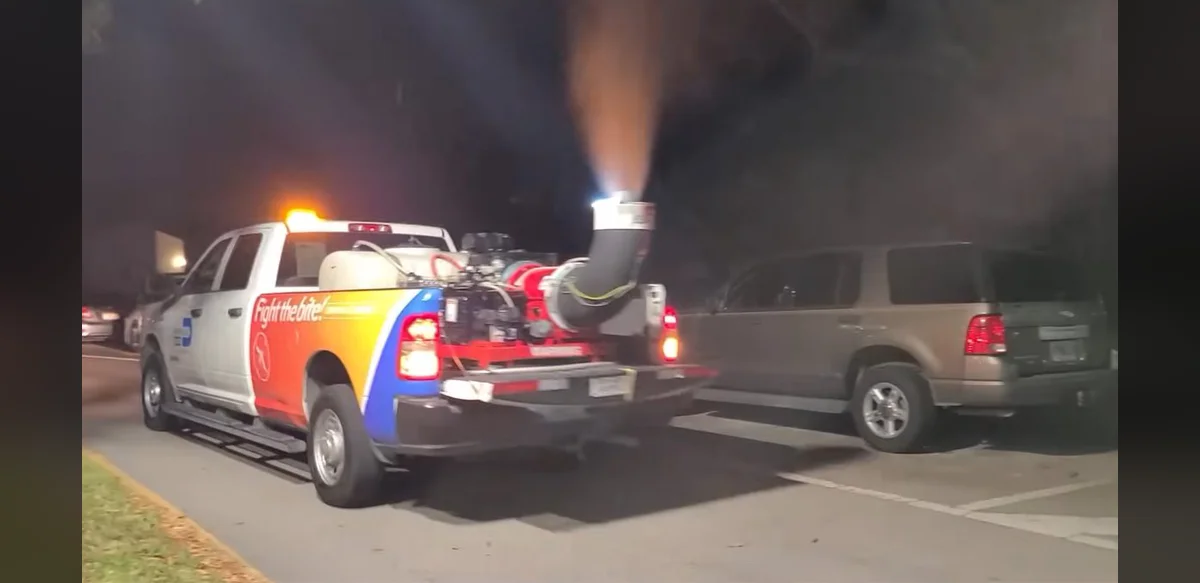
Mosquito control operations rely on specialized vehicles that have served communities for many years. These trucks carry equipment designed exclusively for dispersing insecticides in a fog form to target mosquito populations. Because the vehicles conduct their work after dark when the insects are most active, they remain largely unnoticed by residents during daylight hours.
The practice of using such trucks dates back several decades. Over time the basic approach has remained consistent even as minor refinements have been introduced to the dispersal systems. The trucks follow predetermined routes through neighborhoods releasing a controlled cloud of treatment that settles on vegetation and standing water where mosquitoes breed.
Nighttime scheduling offers practical advantages. Lower temperatures help the fog remain suspended longer and reduce the chance of rapid evaporation. Fewer people and vehicles are present on the streets which minimizes disruption and allows operators to cover larger areas efficiently. As a result most residents never observe the process firsthand.
The equipment mounted on these trucks consists of large tanks and blower units that convert liquid insecticide into a fine aerosol. The fog drifts through yards and parks reaching locations that are difficult to treat by other means. Operators monitor wind conditions and adjust output to ensure the material stays within the intended zones.
Public health agencies coordinate these efforts as part of broader programs aimed at limiting mosquito numbers. The trucks represent one component within a range of strategies that also include source reduction and larvicide application. Their contribution is most noticeable in regions where mosquito activity peaks during warmer months.
Because the vehicles operate outside normal waking hours their presence is documented mainly through occasional sightings or official announcements. Communities may receive advance notice so residents can take simple precautions such as closing windows. The low visibility of the work underscores how routine yet essential the service remains.
Maintenance of the fleet involves regular checks on the fogging apparatus and calibration of spray rates. Drivers follow mapped paths that have been refined through years of field experience. The overall system has proven reliable across different climates and urban layouts.
In summary the trucks continue a long established method of mosquito management that stays hidden from view for the majority of the population. Their nocturnal timetable and specialized function keep them apart from everyday traffic while supporting ongoing efforts to maintain comfortable outdoor environments.


