

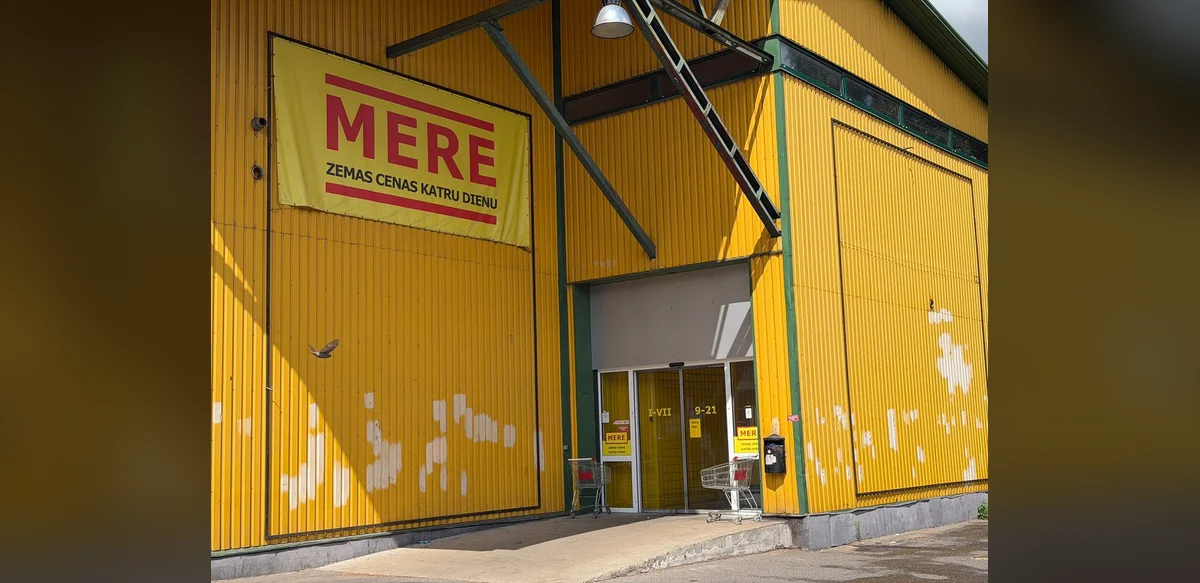
The abrupt shutdown of the Mere retail network has created significant financial strain for producers across Latvia. Triggered by European Union sanctions, the closure has left suppliers facing unpaid invoices and perishable inventory that could not be redirected in time.
Industry representatives report losses reaching several million euros. Many companies had prepared large volumes of goods specifically for Mere stores, only to see orders cancelled without warning. Dairy processors, meat packers and vegetable growers have been particularly affected because their products have short shelf lives.
For roughly two weeks following the announcement, manufacturers received no further instructions or payments. Warehouses filled with finished stock that could not be sold through alternative channels at short notice. Some firms attempted to redirect goods to other retailers, yet limited storage capacity and strict quality standards made this difficult.
Latvian agricultural associations have called for government support measures. They argue that the sudden nature of the closure left businesses with little opportunity to adjust production schedules or find new buyers. Smaller suppliers without diversified customer bases face the greatest risk of insolvency.
Officials from the Ministry of Economics have acknowledged the problem and are reviewing possible compensation schemes. Discussions include temporary liquidity assistance and help with export promotion to other European markets. However, details on the scale and timing of any aid remain unclear.
The Mere chain operated dozens of discount outlets in Latvia and neighbouring countries. Its parent structure became subject to EU restrictive measures linked to ownership ties. As a result, banking services were suspended and normal commercial operations became impossible.
Suppliers describe the situation as unprecedented. Contracts that had been honoured for years were terminated overnight. Some companies had invested in new production lines to meet Mere volume requirements and now carry additional debt without corresponding revenue.
Consumer groups note that the disappearance of the low-cost retailer may also affect household budgets. Shoppers who relied on its competitive pricing now face higher costs at remaining chains. Yet the primary concern voiced by authorities centres on the upstream impact felt by domestic producers.
Analysts expect further consolidation in the Latvian retail sector. Larger international players may absorb some of the vacated market share, while smaller local operators could struggle. The episode highlights the vulnerability of supply chains when sanctions affect major commercial actors.
Meetings between producer associations and government representatives are scheduled for the coming week. Participants hope to agree on concrete steps to mitigate damage and prevent similar disruptions in the future. In the meantime, companies continue to assess their individual losses and explore legal avenues for recovering outstanding payments.


