

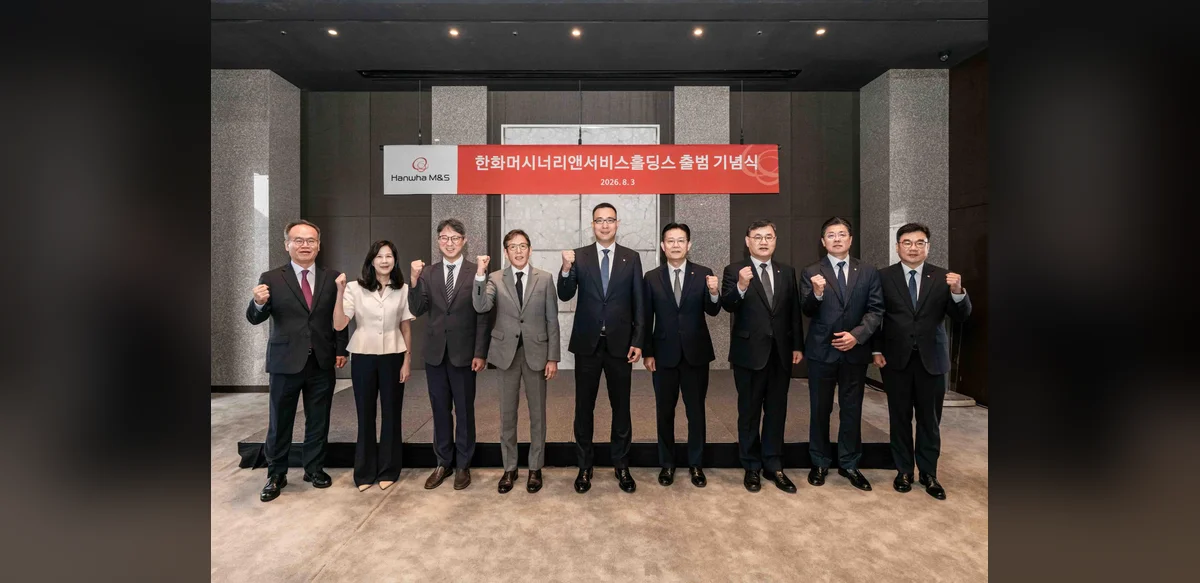
The establishment of Hanwha Machinery and Service Holdings, known as M&S, took place on August 3. This development places its president and head of future strategy, Kim Dong-seon, in a position where his leadership approach faces close observation from industry observers.
The new entity combines machinery operations with service functions under one structure. Company statements indicate the move aims to streamline processes and support long-term planning. Kim, who holds responsibility for strategic direction, now oversees the integration of these units.
Market analysts note that such consolidations often serve as benchmarks for executive performance. In this case, the timing coincides with broader shifts in industrial sectors where efficiency and innovation receive heightened attention. Observers expect measurable outcomes within the first year of operation.
Internal communications from the company emphasize continuity in existing projects while introducing new coordination mechanisms. Employees across divisions have been briefed on reporting lines that now converge under the M&S framework. This reorganization is described as a step toward unified decision-making.
Industry publications have highlighted similar corporate restructurings in recent years. They point out that success frequently depends on clear communication and alignment of goals across teams. For Kim, the current assignment adds visibility to his track record in strategy formulation.
Financial markets reacted with moderate interest to the announcement. Shares of related Hanwha entities showed limited movement in the days following the launch. Commentators attribute this to the gradual nature of the changes rather than immediate operational shifts.
Regulatory filings confirm that the new holding structure complies with applicable corporate governance standards. No major alterations to ownership or capital allocation were reported at the time of establishment. The focus remains on operational alignment.
Looking ahead, the performance of M&S will likely influence perceptions of leadership effectiveness. Key indicators may include project delivery timelines, cost management, and cross-division collaboration metrics. Stakeholders will monitor these areas as the organization settles into its new configuration.
The broader context involves ongoing adjustments in manufacturing and service sectors. Companies continue to explore holding structures to manage complexity and allocate resources more effectively. Hanwha M&S represents one example of this trend.
Kim’s dual role in presidency and future strategy places him at the center of both daily operations and planning activities. This combination of responsibilities requires balancing short-term execution with longer-term vision. Industry peers have noted that such dual mandates can accelerate decision cycles when managed well.
No specific performance targets were disclosed in initial announcements. However, the company indicated that periodic reviews would assess progress against internal benchmarks. These reviews are expected to inform any subsequent adjustments to the structure.
Overall, the launch marks a notable development for the involved parties. Attention now turns to how the new entity functions in practice and what results emerge under current leadership. Further updates are anticipated as integration proceeds.


