

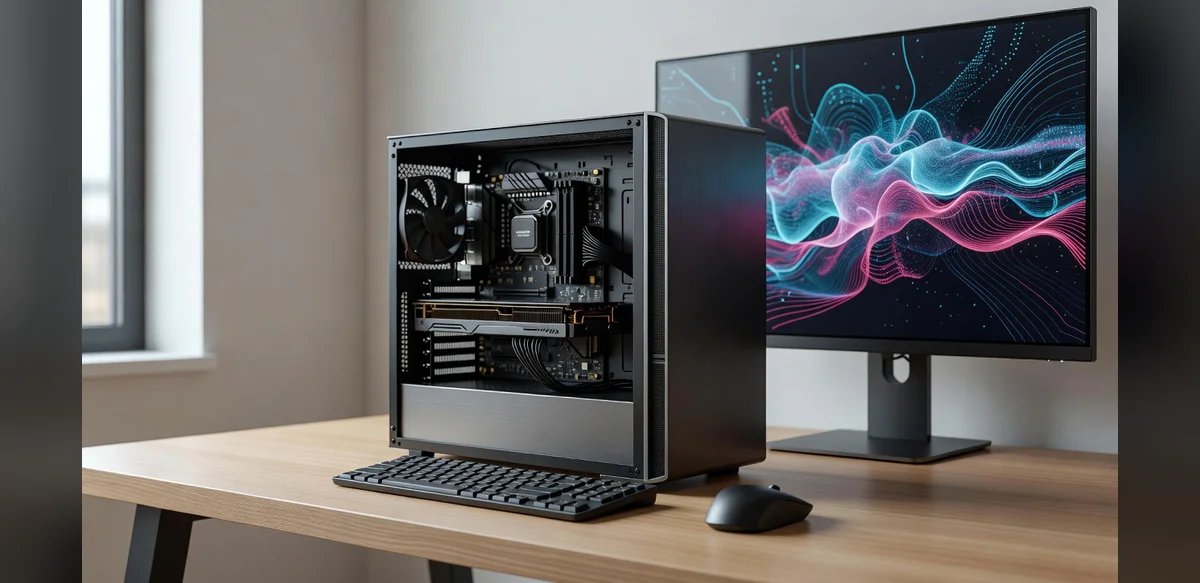
Meta has introduced a new artificial intelligence model designed to operate completely without internet connectivity. The model, known as Muse Glimmer, features thirty billion parameters and is available at no cost to users. It requires no ongoing subscription and does not rely on remote data centers for processing. Instead, it functions locally on compatible hardware.
The primary hardware specification involves a graphics processing unit equipped with at least twenty-four gigabytes of video random access memory. This threshold ensures the model can load and execute its parameters efficiently during operation. Users with lower memory capacities may encounter limitations or reduced performance when attempting to run the system.
Running artificial intelligence tools in an offline environment offers several practical advantages. Data remains on the user’s device throughout the process, which can address concerns related to privacy and external access. Additionally, the absence of network dependency means the model continues to function in areas with limited or no internet infrastructure.
The release emphasizes accessibility for individuals and organizations seeking local computation options. By eliminating subscription requirements, the approach removes recurring financial barriers associated with cloud-based alternatives. Hardware remains the central consideration, as the graphics unit must meet the specified memory standard to support full functionality.
Technical details indicate that the thirty billion parameter scale represents a substantial computational load. Such models typically demand significant memory resources to store weights and activations during inference tasks. The twenty-four gigabyte requirement aligns with this scale, providing sufficient capacity for stable execution without external support.
Potential applications include research environments where data sensitivity precludes cloud transmission. Educational institutions may also explore the model for controlled settings that prioritize local resources. The free distribution model further supports experimentation across varied user groups.
Hardware compatibility extends to graphics units meeting or exceeding the memory threshold. Users are advised to verify their equipment specifications prior to installation. Performance characteristics may vary based on additional factors such as processor speed and system memory, though the graphics unit serves as the primary constraint.
The announcement highlights a shift toward localized artificial intelligence solutions. This development allows greater user control over model deployment while maintaining the core capabilities of large parameter counts. Continued advancements in consumer graphics hardware could broaden access to similar offline systems in the future.
Overall, the model provides a self-contained option for those equipped with appropriate graphics processing resources. Its design focuses on independence from network services, aligning with growing interest in decentralized computing approaches. The specified requirements ensure reliable operation within the defined parameters.


