


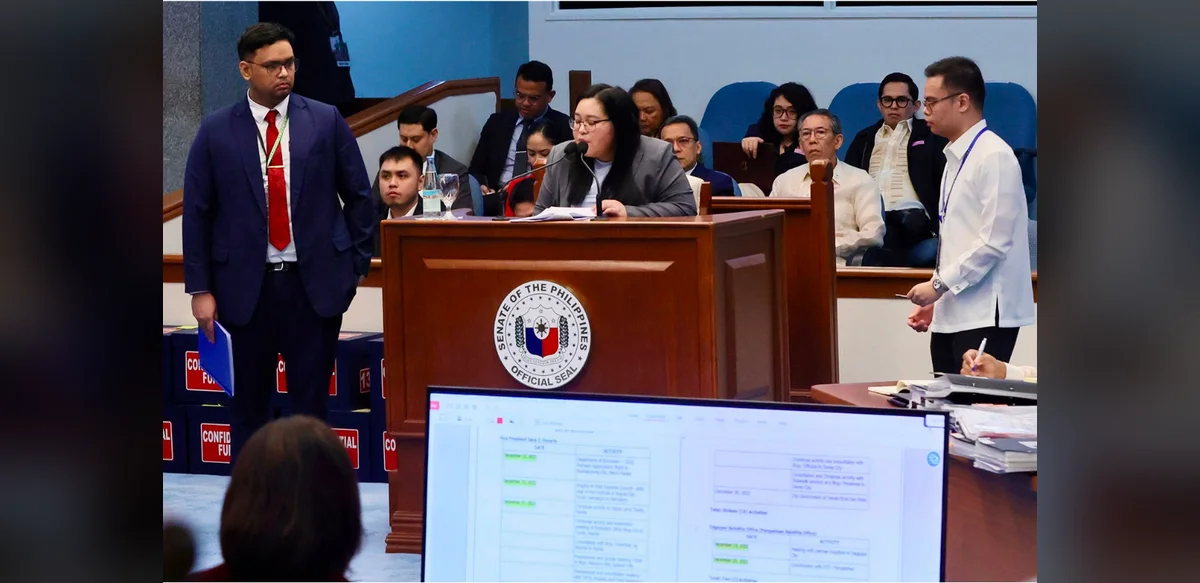
A Commission on Audit official appeared before the Senate impeachment proceedings and stated that the Office of the Vice President had not supplied documentation showing how confidential funds were allocated for security purposes related to former President Rodrigo Duterte. The testimony focused on the absence of supporting records rather than any confirmed misuse.
The auditor explained that standard verification procedures require detailed receipts and justifications for expenditures drawn from confidential allocations. Without these materials, examiners could not confirm whether the amounts in question served the stated protective function. The presentation remained limited to procedural observations and avoided broader conclusions about intent or legality.
Senators present asked clarifying questions about the timeline of fund releases and the channels through which requests for documentation had been made. The witness responded that multiple follow-up communications had gone unanswered or had produced only partial replies. This lack of response formed the core of the reported finding.
Observers noted that the exchange occurred within the larger context of an impeachment trial examining several aspects of executive spending. The confidential fund issue was presented as one element among others under review. No immediate ruling followed the testimony, as the court continued with additional witnesses and evidence submissions.
Legal experts following the proceedings emphasized that audit findings of this nature typically trigger further requests for records rather than automatic determinations of wrongdoing. The distinction between insufficient documentation and proven irregularity was highlighted repeatedly during commentary. Both sides in the chamber acknowledged the importance of maintaining clear trails for all public expenditures.
The Office of the Vice President has not issued a detailed public response to the specific statements made during the hearing. Previous statements from the office have maintained that all confidential fund uses complied with existing guidelines and were directed toward legitimate protective measures. Further clarification may emerge as the trial advances and additional documents are requested or submitted.
The Senate proceedings are scheduled to continue with more testimony on related budget matters. Participants expect additional auditors and agency representatives to appear in coming sessions. The focus remains on establishing a complete factual record regarding the handling of sensitive allocations.
Public interest in the case centers on transparency surrounding discretionary spending at high levels of government. Advocates for stronger oversight argue that clearer reporting standards could prevent future disputes. Meanwhile, defenders of current practices stress the need for operational flexibility in security-related decisions.
The Commission on Audit continues its routine examinations of agency accounts across multiple branches. Findings from these reviews are compiled into annual reports that inform legislative and judicial actions. The current testimony draws directly from that ongoing oversight work.
No final determination on the confidential fund matter has been reached by the impeachment court. The process allows for ongoing submission of evidence and cross-examination. Observers anticipate that documentation gaps identified so far will prompt additional requests before any conclusions are drawn.
The episode underscores the procedural requirements that govern confidential expenditures in Philippine governance. Both the audit agency and legislative bodies play roles in verifying compliance. Future sessions are expected to explore these requirements in greater detail.

