

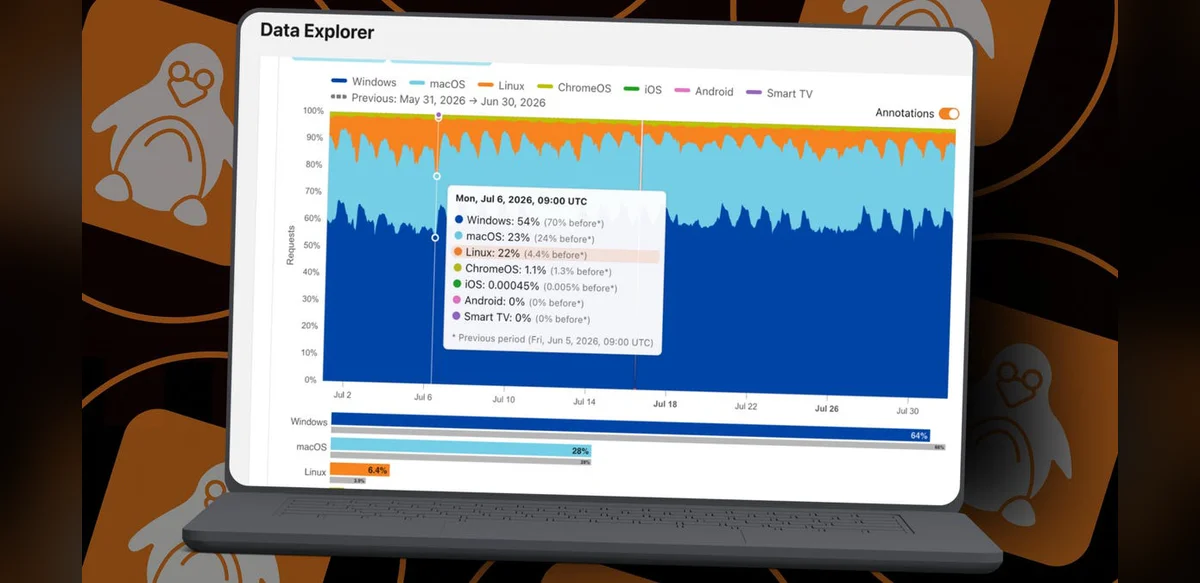
Recent measurements from a major internet infrastructure provider indicate that the share of desktop computers running Linux reached 22 percent during one particular workday. This figure represents a notable increase compared with previous observations and points to a broader shift in how users interact with their computing devices.
The data comes from traffic analysis conducted across a large network of websites and services. Such measurements offer a snapshot of operating system usage in real-world conditions rather than relying solely on surveys or sales reports. Observers note that the single-day peak may reflect both steady growth and temporary factors such as remote work patterns or developer activity.
Linux distributions have long appealed to technical users because of their customizability and lack of licensing fees. Over the past several years, improvements in hardware compatibility and the availability of familiar productivity applications have made the platform more accessible to a wider audience. These developments appear to be contributing to the observed rise in adoption.
Industry analysts suggest that the trend could influence software development priorities. Application vendors may increasingly test their products on Linux environments to ensure consistent performance. At the same time, hardware manufacturers continue to expand support for components commonly used with open-source operating systems.
The reported increase also raises questions about long-term market dynamics. While proprietary systems still hold the majority share, sustained growth in Linux usage could encourage greater competition and innovation across the desktop segment. Continued monitoring will be necessary to determine whether the 22 percent level represents an outlier or the beginning of a more permanent change.
Educational institutions and research organizations have historically favored Linux for its stability and transparency. As more students and professionals gain experience with these systems, the pool of potential users expands naturally. This generational effect may further support adoption rates in coming years.
Cloudflare’s methodology involves sampling requests from millions of endpoints worldwide. While the precise composition of the sample is not disclosed in detail, the scale of the network provides a broad view that complements other measurement approaches. Experts recommend comparing multiple data sources before drawing definitive conclusions about overall market share.
In summary, the single-day reading of 22 percent Linux desktop usage highlights an ongoing evolution in computing preferences. Whether this level persists will depend on continued improvements in usability, application availability, and hardware support. Observers will watch future reports for additional context on this developing story.


