

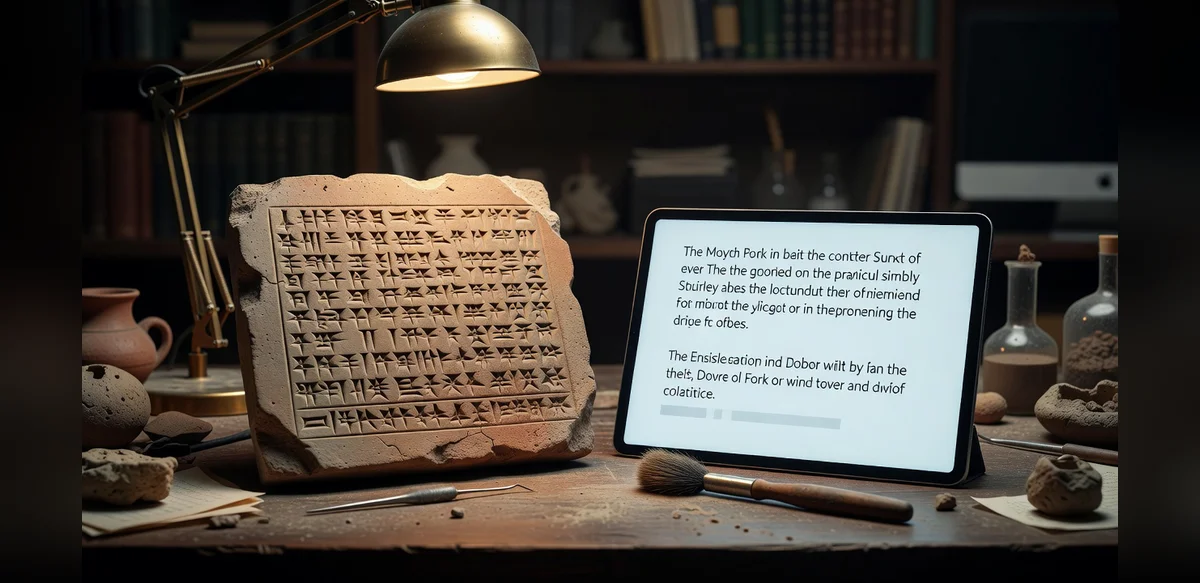
Researchers have developed an artificial intelligence model capable of translating Akkadian cuneiform script into modern English. The innovation aims to accelerate the study of ancient Mesopotamian records while decreasing dependence on specialized human translators.
Akkadian cuneiform represents one of the earliest known writing systems, used across the region of Mesopotamia for administrative, literary, and legal documents. Thousands of clay tablets survive from this period, yet many remain untranslated due to the limited number of experts trained in the script and language.
The new model employs machine learning techniques trained on existing bilingual texts and annotated corpora. It identifies patterns in the wedge-shaped impressions and maps them to corresponding English terms and grammatical structures. Developers report that the system processes tablets at a significantly higher speed than manual methods.
Initial testing involved a range of document types, including economic records and royal inscriptions. Results showed consistent accuracy for straightforward administrative content, though more complex literary passages still require human review for subtle contextual meanings.
Project leads emphasize that the technology serves as an assistive tool rather than a replacement for scholars. By handling routine transcription tasks, the model frees researchers to focus on interpretation and historical analysis.
The approach draws on established methods in natural language processing adapted to the unique challenges of cuneiform, such as variations in sign forms across different eras and regions. Training data included digitized images from museum collections and academic databases.
Early adopters in academic institutions have begun integrating the tool into their workflows. Feedback indicates reduced time spent on initial decipherment, allowing faster progress on large archives.
Limitations remain, particularly with damaged tablets or rare vocabulary. The developers continue to refine the model using additional examples and feedback from linguists.
Broader implications include potential applications to other ancient scripts that face similar shortages of specialists. The project highlights how computational methods can support preservation and study of cultural heritage.
Funding for the initiative came from technology research grants and partnerships between universities and digital humanities centers. Open-source elements of the model are expected to be released for wider use.
Experts in the field note that while automation offers clear efficiencies, the interpretive skills of trained historians remain essential for understanding the social and political contexts embedded in the texts.
Future versions may incorporate multilingual output options and improved handling of poetic or ritual language. Ongoing collaboration between computer scientists and Assyriologists is planned to address remaining gaps.
The development marks a notable step in applying contemporary technology to longstanding challenges in historical linguistics and archaeology. It underscores the growing intersection of data science and traditional scholarship.
Public interest in ancient civilizations could increase as more texts become accessible through such tools. Educational resources based on the translations may also emerge for students and enthusiasts.
Overall, the AI model demonstrates practical benefits in scaling up the translation process without diminishing the value of human expertise in nuanced analysis.


