

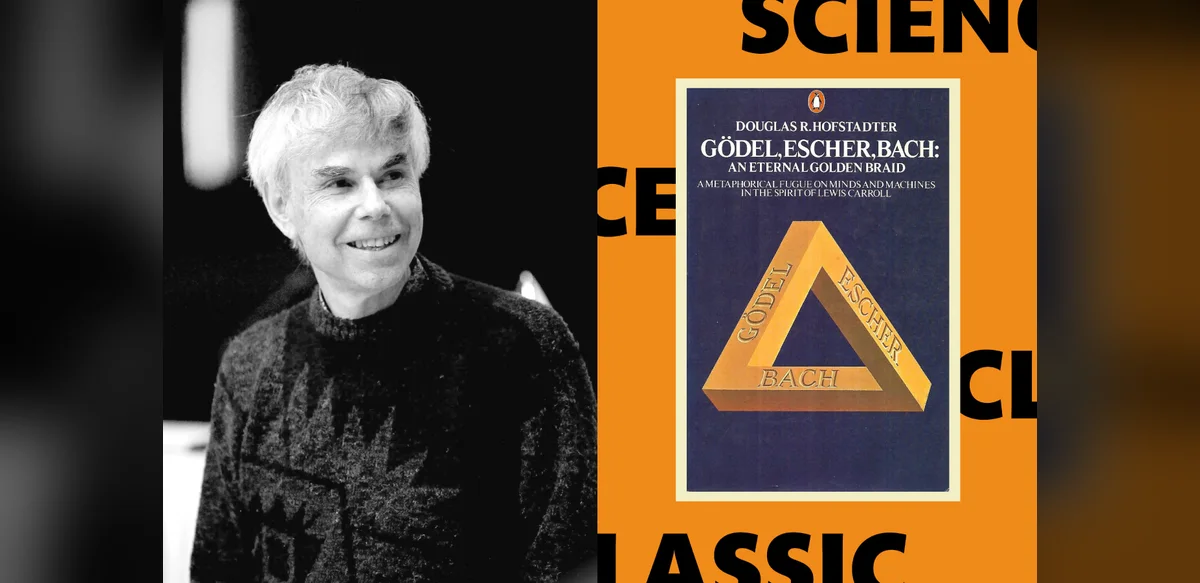
Douglas Hofstadter’s substantial 1979 work examines links between mathematics, music and cognition across nearly 800 pages. Despite its length and unusual structure, the volume rewards readers with insights into the nature of awareness, according to reviewer Gerardo Bandera.
The book connects the ideas of logician Kurt Gödel, artist M.C. Escher and composer Johann Sebastian Bach. It crosses fields including number theory, genetics, artificial intelligence, music, neuroscience and visual arts while addressing how a sense of self emerges from physical matter.
Hofstadter begins with early 20th-century efforts by Bertrand Russell and Alfred North Whitehead to ground mathematics in logic. Their project aimed to eliminate paradoxes but was overturned in 1931 by Gödel’s incompleteness theorem, which demonstrated that formal systems contain true statements they cannot prove.
From this result the author develops the notion of “strange loops,” patterns that enable a system to refer to itself. He traces such loops through Escher’s paradoxical prints and Bach’s canons that return to their starting key, suggesting similar mechanisms underlie consciousness.
To convey these concepts without excessive jargon, Hofstadter employs puzzles, paradoxes and dialogues styled after Lewis Carroll. One dialogue hides an acrostic spelling Bach’s name while illustrating the incompleteness theorem. This inventive approach helped the book receive the Pulitzer Prize in 1980.
Sections on artificial intelligence now read as historical accounts of early expectations. Although later progress has surpassed some predictions, the discussions of creativity and abstraction remain relevant to current limits in machine cognition.


