

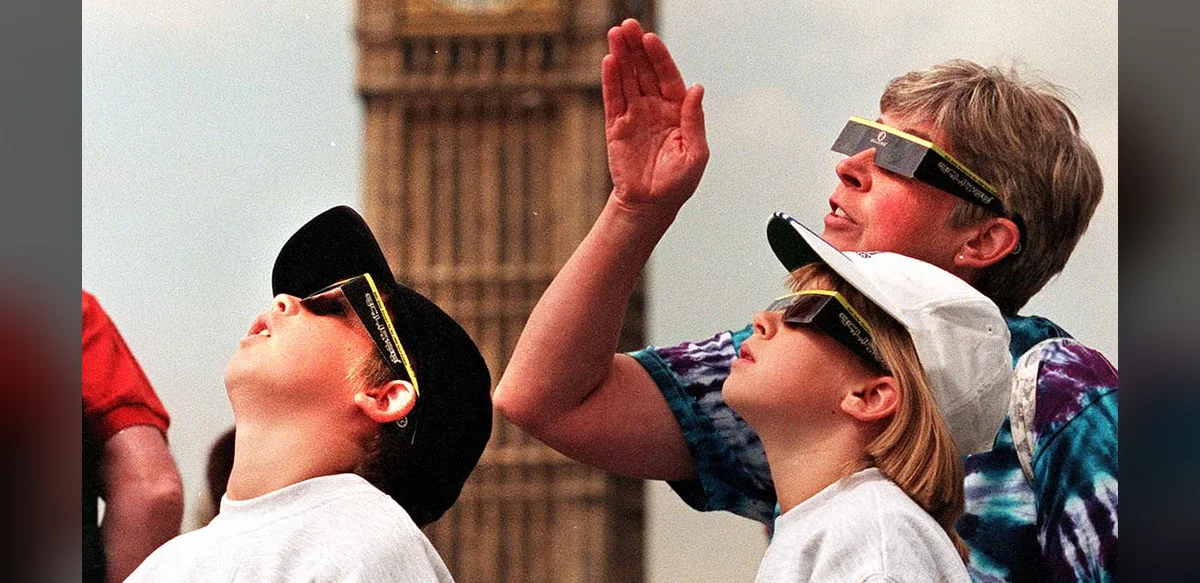
Twenty-seven years have passed since the United Kingdom experienced its most recent total solar eclipse, an event that turned daytime skies unusually dim across parts of the country. Observers at the time described the sudden change in light as creating an unusual atmosphere, with temperatures dropping and wildlife behaving differently than usual. The phenomenon drew attention from both casual viewers and those with a scientific interest in celestial events.
Many individuals who witnessed the eclipse have since shared their recollections of where they were and how the brief period of darkness affected their surroundings. Some stood in open fields or parks, while others watched from urban locations or coastal areas. The shared experience prompted conversations about the rarity of such alignments between the sun, moon, and Earth.
Astronomers note that total solar eclipses visible from the British Isles occur infrequently. The last one took place in the summer of 1999, when the path of totality crossed parts of Cornwall, Devon, and other southern regions before moving onward. Partial phases could be seen more widely, but the complete obscuration remained limited to a narrow corridor.
Reflections from that day often highlight the contrast between normal daylight and the sudden twilight-like conditions. Streetlights activated automatically in some towns, and birds reportedly returned to roosts earlier than expected. These details have been recounted in personal accounts collected over the intervening years.
Public interest in eclipses has continued since then, with subsequent partial events and international total eclipses drawing attention through media coverage and educational programs. Organizations focused on astronomy have used past observations to explain orbital mechanics and the geometry required for such alignments.
Looking ahead, the next opportunity for totality within the United Kingdom is not expected for several decades. This interval underscores the value placed on documenting and preserving memories from the previous occurrence. Community groups and science centers occasionally organize viewing events or exhibitions that reference historical eclipses to illustrate broader patterns in solar activity.
Weather conditions played a role in visibility during the 1999 event, with clear skies reported in some areas and cloud cover limiting views elsewhere. Those fortunate enough to have unobstructed sightlines often emphasize the brief duration of totality, which lasted only a couple of minutes in most locations.
The event also prompted discussions about safety measures for eye protection during solar viewing. Experts consistently advise against direct observation without proper filters, a guideline that remains relevant for any future eclipses. Educational materials distributed around that time helped raise awareness of these precautions.
In the years following, researchers have studied the societal response to the eclipse, including increased engagement with science topics and temporary boosts in tourism to viewing sites. Such impacts, while short-lived, illustrate how natural phenomena can intersect with public curiosity.
Archival photographs and video recordings from the period continue to circulate, providing visual context for those too young to remember the original occurrence. These materials serve as reminders of the predictable yet infrequent nature of eclipses and the importance of preparation for future ones.
Overall, the 1999 eclipse stands as a notable point in recent British astronomical history, remembered through personal stories and scientific records alike. As time passes, new generations may encounter similar events, carrying forward the tradition of observation and reflection.


