

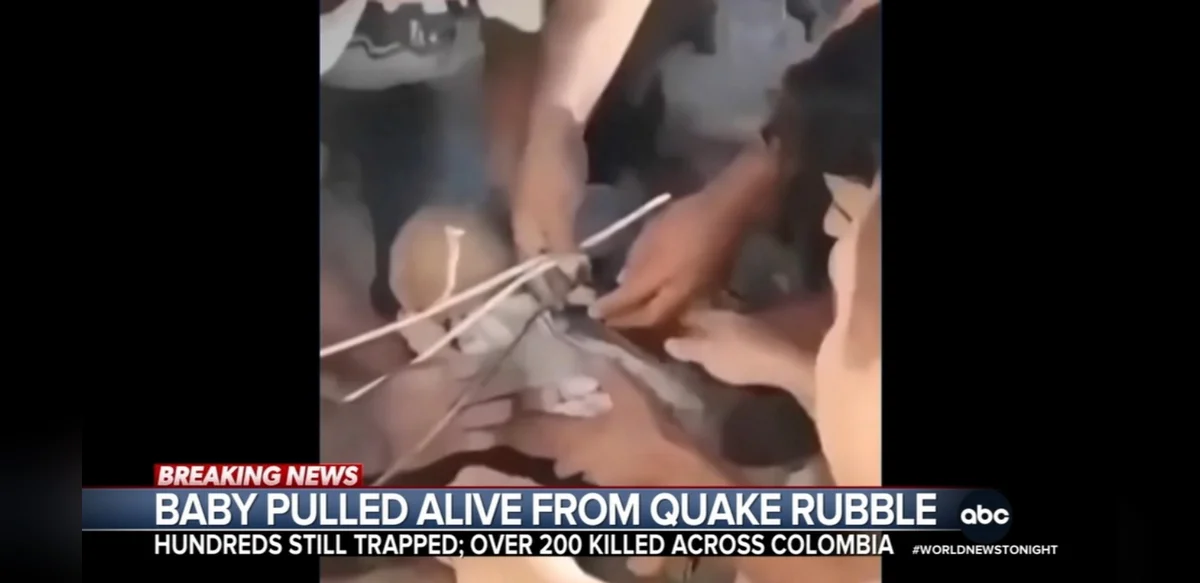
Rescue operations following a powerful earthquake in Colombia have highlighted the critical role of rapid response in saving lives. In one notable case, responders located and extracted a very young child from beneath layers of rubble after detecting faint sounds that guided their efforts.
The incident occurred amid widespread destruction caused by the seismic event, which affected multiple areas and left numerous structures in ruins. Teams worked methodically through the debris, using specialized equipment and careful listening techniques to identify potential survivors.
Footage from the operation captures the moment when the infant, dressed in a dust-covered outfit, was gently removed from the wreckage. The process was conducted with precision to avoid further harm, reflecting standard protocols in post-disaster recovery.
Such rescues underscore the challenges faced by emergency personnel in earthquake zones, where time is a decisive factor. Coordination among local and international aid groups often proves essential in these scenarios.
Authorities have emphasized ongoing assessments of affected regions to ensure all possible survivors are accounted for. Support services, including medical care for those extracted from rubble, continue to operate at full capacity.
The event has drawn attention to preparedness measures that can mitigate impacts in seismically active areas. Community training programs and infrastructure reinforcements are among the topics under discussion by officials.
While details of individual cases remain limited to protect privacy, the successful outcome in this instance provides a measure of hope amid the broader recovery process. Investigations into the earthquake’s causes and effects are expected to inform future safety guidelines.
Additional reports indicate that similar operations are underway in other impacted locations, with responders maintaining focus on systematic searches. The overall response highlights the resilience required in the face of natural disasters.
Public health measures have also been activated to address potential secondary risks in the aftermath, such as sanitation and access to clean water. These efforts complement the primary rescue activities.
As rebuilding begins in the hardest-hit zones, attention turns to long-term support for displaced residents. Temporary shelters and resource distribution networks play a key role in stabilizing the situation.
The Colombia earthquake serves as a reminder of the unpredictable nature of such events and the importance of sustained vigilance. International cooperation in disaster management continues to evolve based on experiences like this one.
Further updates from the scene are anticipated as teams complete their sweeps of remaining debris fields. The focus remains on thoroughness and safety throughout the process.


