

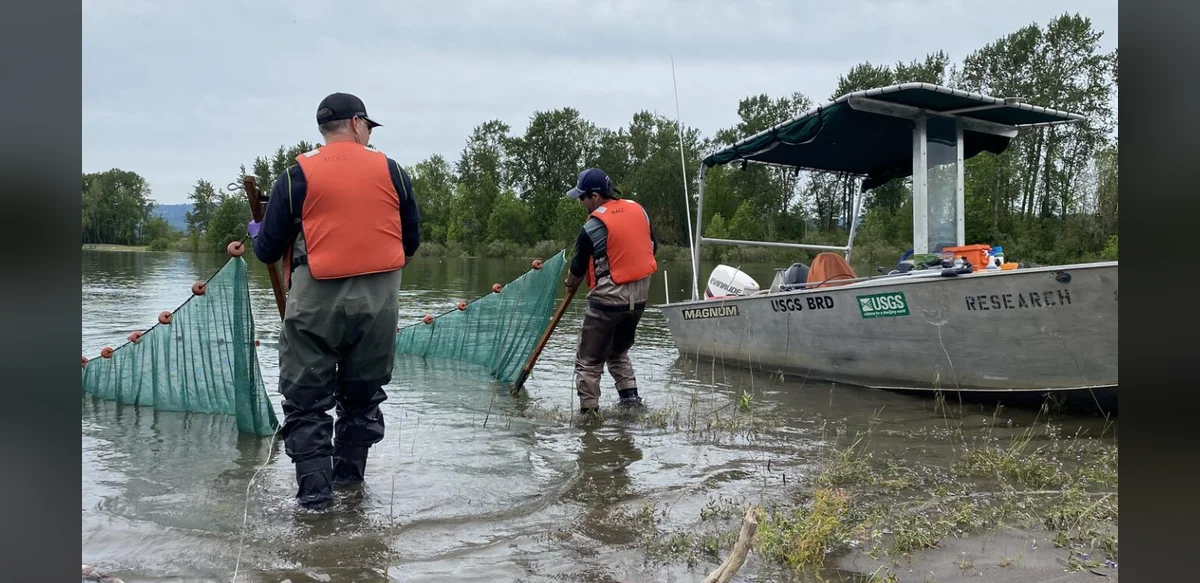
A standard dredging operation on the Lower Columbia River has turned into a long-term study on whether dredged sediment can restore lost wildlife habitat. In October 2020, engineers moved 225,000 cubic yards of material from St. Helens Bar and shaped it into four small islands plus a side channel along the Washington shore between river miles 86 and 84.5. The goal is to test if these features can support young salmon. The river serves as a key shipping route, with its channel handling over 40 million tons of cargo yearly. Annual dredging removes 6 to 8 million cubic yards of sediment to maintain depth. Much natural habitat has been lost due to dams and shoreline structures, eliminating about 75 percent of tidal areas. Shallow zones are vital for juvenile salmon to rest, avoid predators, and feed. The 2020 work rebuilt seven acres of land, linked island sections, and added a protected channel. Compost and native plants were added to aid growth. Monitoring tracks fish use, plant changes, and habitat productivity versus natural sites. Separate work identifies five future placement locations ahead of 2027 maintenance. Baseline data on water depth, fish activity, and conditions will allow before-and-after comparisons. If results prove positive, the method could guide similar efforts to turn maintenance sediment into habitat gains for salmon across the region.


