

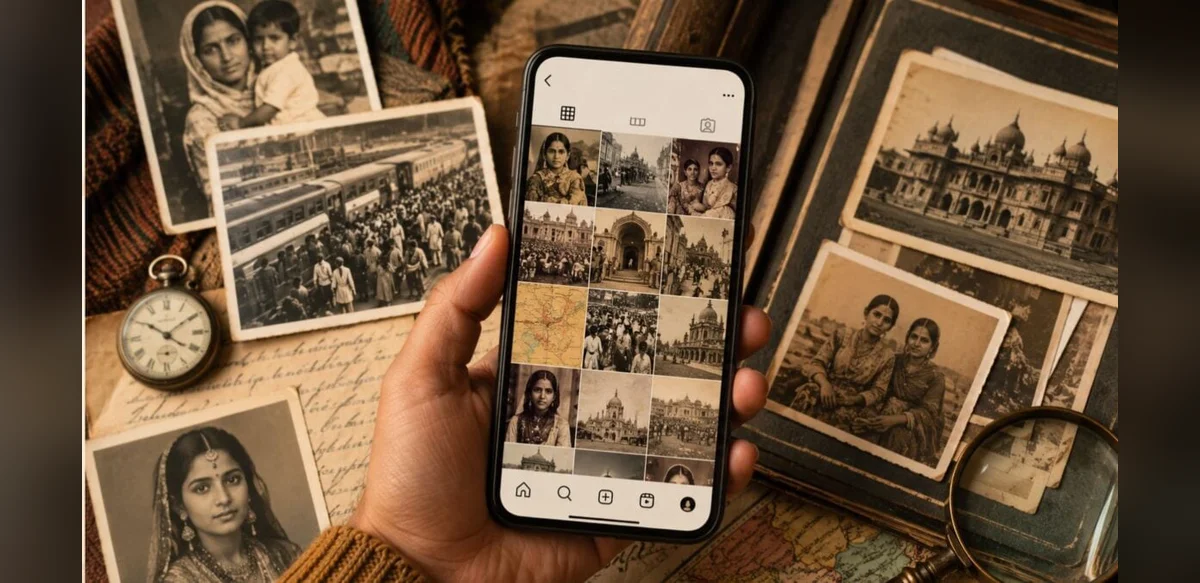
Digital platforms have emerged as unexpected repositories for historical narratives that might otherwise fade from public memory. Instagram accounts dedicated to preserving India’s past are gaining attention among younger audiences who prefer visual and concise formats for learning.
These online collections feature a range of materials including family heirlooms, archival photographs, and accounts of women whose contributions have received limited recognition in traditional records. The approach relies on user submissions and careful curation to present fragments of history in an accessible manner.
Many of the posts highlight personal items such as letters, clothing, and household objects that carry stories from earlier decades. Curators often pair these images with brief explanations drawn from oral histories or limited documentation. This method allows viewers to connect with the material without requiring extensive background reading.
The focus on women’s experiences stands out in several of these archives. Stories range from professional achievements in fields like education and medicine to everyday roles in community life during periods of social change. By presenting these accounts alongside photographs, the accounts aim to fill gaps left by mainstream historical sources.
Younger users report that the format encourages repeated engagement. Short captions and high-quality images fit into brief moments of scrolling, making historical content more approachable than lengthy texts or formal museum visits. Some accounts have grown large followings by consistently posting material that prompts comments and shares.
Challenges remain in verifying the accuracy of submitted items. Curators typically cross-reference details with available records or consult historians when possible. Questions about context and representation arise regularly, leading some accounts to include disclaimers or invite corrections from knowledgeable followers.
The trend reflects broader shifts in how information about the past circulates. Traditional institutions continue to hold extensive collections, yet social media provides an additional channel for public interaction. Partnerships between digital archivists and established museums have begun in a few cases, allowing selected materials to reach wider audiences.
Observers note that the visual emphasis can sometimes simplify complex events. Still, the accounts succeed in sparking initial interest that may lead to further exploration through books or visits to physical archives. Several creators have expanded their work into podcasts or printed compilations based on popular series.
India’s diverse regional histories receive attention through location-specific posts. Content covers urban centers as well as smaller towns, drawing from contributors across different states. This geographic spread helps illustrate variations in customs, clothing, and daily life over time.
Privacy considerations play a role when personal photographs are involved. Many accounts obtain permission from families before posting and remove images upon request. The balance between preservation and respect for individual boundaries remains an ongoing discussion within these communities.
Overall, these Instagram-based efforts demonstrate how contemporary tools can support historical awareness. By focusing on overlooked stories and tangible objects, they offer an entry point for new generations to consider the layers of India’s past.


