

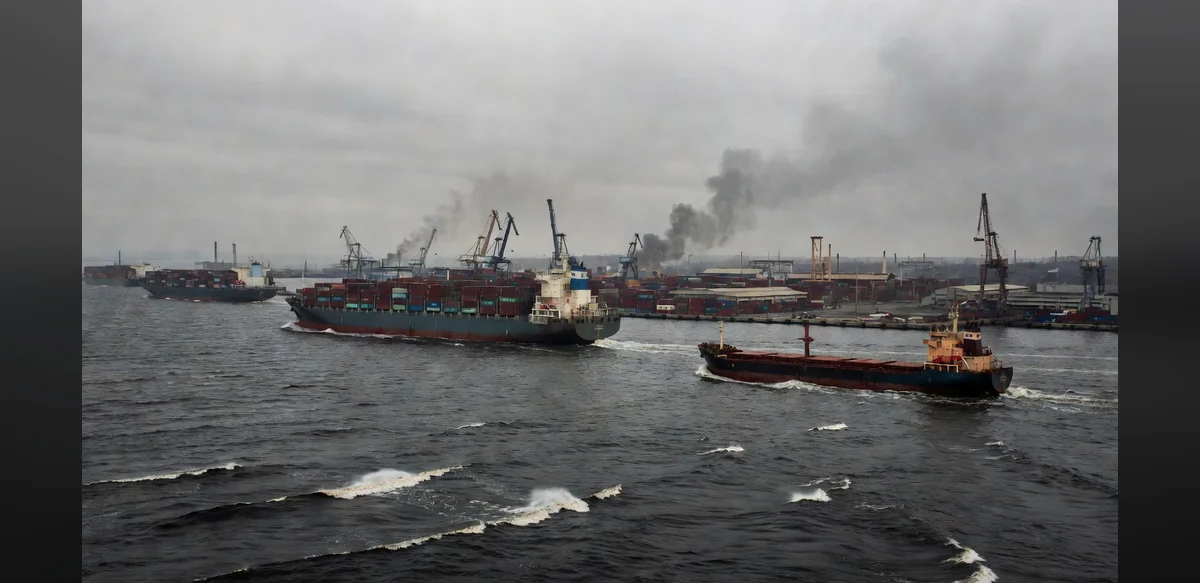
Russia and Ukraine have exchanged intense attacks on each other’s maritime facilities during their prolonged conflict, placing the Black Sea grain trade under increasing pressure. Recent strikes targeted the region surrounding Izmail, a key Danube port in Ukraine, causing damage to infrastructure and complicating export operations.
The incident occurred overnight, with reports indicating harm to port facilities essential for handling agricultural shipments. This development adds to the challenges faced by grain exporters who rely on the waterway for access to international markets. The Black Sea has long served as a vital corridor for wheat, corn, and other commodities from the region.
Ongoing hostilities have led to repeated disruptions in shipping lanes. Both sides have focused on naval and port assets, resulting in reduced vessel movements and higher insurance costs for operators. Traders must now navigate heightened risks when planning routes through affected areas.
Grain exports from Ukraine have already seen fluctuations due to the war. Ports along the Danube provide an alternative to traditional Black Sea outlets, yet they too face threats from aerial and missile activity. Damage to storage and loading equipment can delay shipments for weeks while repairs are completed.
International buyers of Ukrainian grain monitor these events closely. Supply chain managers seek alternative sources in South America and elsewhere to maintain steady deliveries. Price volatility has followed each new report of strikes, affecting futures contracts on major exchanges.
Efforts to establish safe passage corridors have met with limited success. Previous agreements aimed at protecting grain vessels expired amid renewed fighting, leaving commercial traffic exposed. Shipping companies adjust schedules and reroute where possible, though options remain constrained by geography.
The broader economic impact extends beyond immediate port damage. Farmers in Ukraine face uncertainty over when and how their harvests will reach buyers. Storage capacity at inland facilities fills quickly when outbound movement slows, raising spoilage concerns for perishable goods.
Regional authorities have urged caution and coordinated responses to protect remaining export capacity. Humanitarian organizations note that any reduction in grain flows can influence global food security, particularly in import-dependent nations.
Maritime analysts observe that attacks on infrastructure create ripple effects lasting months. Rebuilding damaged terminals requires materials and labor that may be diverted by other wartime priorities. This prolongs the period of reduced throughput.
Vessel operators report increased scrutiny from insurers and flag states. Additional security measures, such as convoy arrangements or armed escorts, add to operational expenses passed along the supply chain.
Despite these obstacles, some trade continues. Smaller barges and coastal vessels attempt to maintain minimal flows, though volumes fall short of pre-conflict levels. Market participants adapt by shifting focus to rail and road links where feasible.
The situation underscores the vulnerability of concentrated export hubs during armed conflict. Diversification of routes and investment in redundant facilities could mitigate future shocks, yet such measures require time and stable conditions to implement.
Observers expect continued volatility in grain markets as long as maritime strikes persist. Daily updates on port status influence trading decisions worldwide, highlighting the interconnected nature of modern agricultural commerce.
Local communities near Izmail and similar facilities experience direct consequences. Employment tied to port operations declines when activity drops, affecting families dependent on related industries.
Global attention remains fixed on developments in the Black Sea. Diplomatic channels continue to explore avenues for de-escalation that might eventually restore normal shipping patterns, though progress appears slow.
In summary, the recent strikes illustrate how maritime warfare directly impairs critical trade arteries. The grain sector, already strained, must contend with further setbacks that test resilience across multiple continents.


