

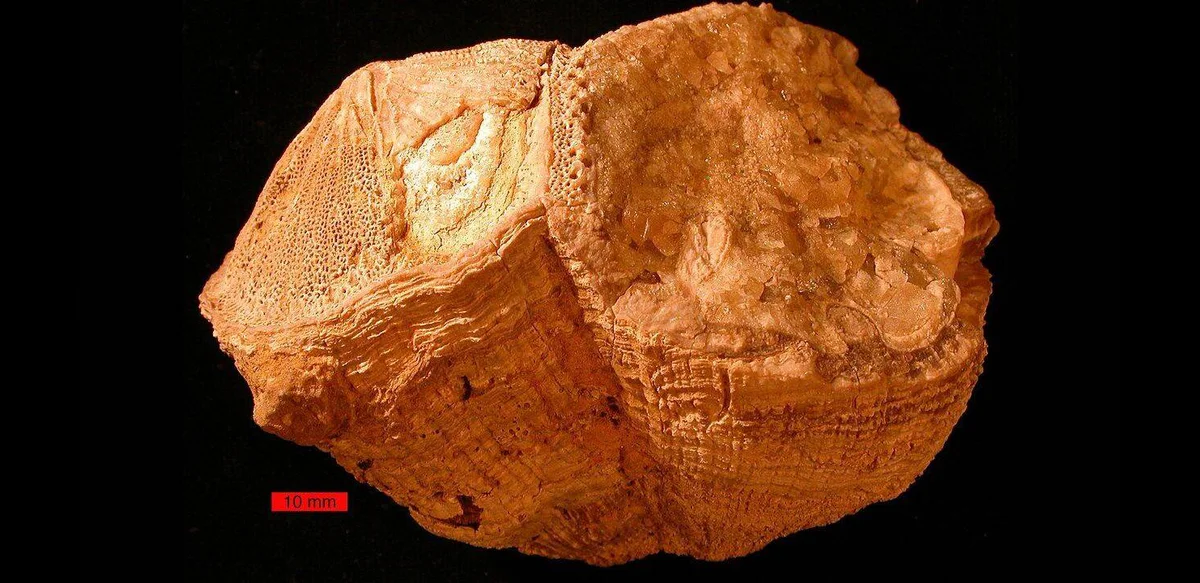
Laser analysis of an ancient fossil shell shows that roughly 70 million years ago in the late Cretaceous period a year contained about 372 days and each day lasted approximately 23 hours and 31 minutes. Researchers studied growth layers in one fossilized rudist bivalve shell of the species Torreites sanchezi found in the Al-Hajar Mountains of Oman. The laser method allowed more precise counting of daily increments than earlier microscope techniques and also provided data on ocean temperatures several degrees higher than present. The shell preserved signs of a likely partnership with photosynthetic symbionts comparable to those in living giant clams. The specimen lived more than nine years on a shallow tropical seabed that is now dry land. Three counting approaches were combined to reach an estimate of 372 growth layers per year. Dividing the fixed length of a year by this number produced the estimated day length. The same figure was used with established models to calculate an Earth-Moon distance of about 383 million metres, consistent with the Moon’s slow retreat at roughly 3.82 centimetres annually. Daily chemical changes in the shell exceeded seasonal and tidal variations, supporting the presence of photosynthetic partners.


