

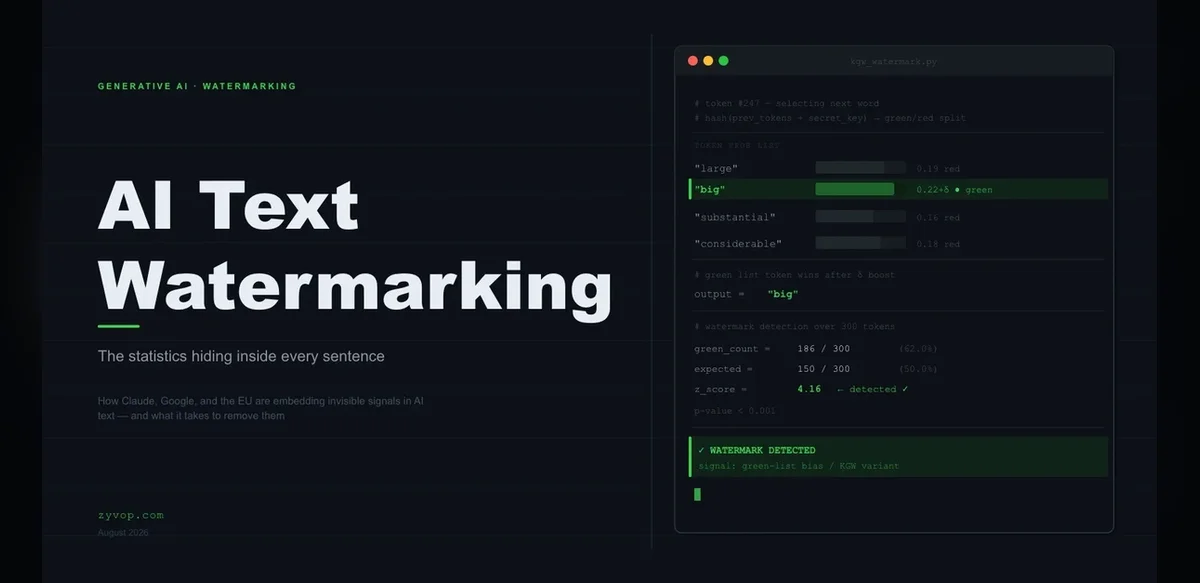
Researchers have introduced a method to embed invisible watermarks in text generated by large language models such as Claude. The approach, implemented as of August 2026, relies on subtle statistical preferences in word selection rather than any visible markers or special characters. This technique allows detection of machine-generated content through analysis of probability distributions across sentences.
The watermark functions by biasing the model toward certain word choices during generation. These biases create a detectable pattern that can be identified statistically without altering the overall readability or meaning of the output. Developers have stated that the signal remains consistent across responses while preserving natural language flow.
Studies examining the robustness of this system indicate that the watermark can withstand some forms of text modification. However, research also explores potential removal techniques, including paraphrasing tools and adversarial editing methods. Early findings suggest that complete removal often requires significant changes that may affect text quality or coherence.
It is important to note that successful detection of a watermark does not equate to definitive proof of authorship. The presence of the signal confirms that a particular model was likely involved in generation, yet it does not identify the individual user or rule out subsequent human editing. Experts emphasize the distinction between technical detection and legal attribution.
Further analysis of the method highlights its reliance on internal model probabilities. By tracking deviations from expected word distributions, analysts can extract the embedded signal with high accuracy under controlled conditions. This statistical foundation differentiates the approach from earlier watermarking attempts that used explicit tokens or formatting.
Ongoing evaluations continue to assess performance across varied prompts and languages. Preliminary data shows reliable detection rates for English-language outputs, with ongoing work to extend consistency to other linguistic contexts. Limitations remain in short texts where fewer opportunities exist for statistical bias to accumulate.
The development reflects broader industry efforts to address concerns around AI-generated content in education, publishing, and online platforms. By providing a built-in detection mechanism, the system aims to support transparency without restricting model capabilities. Future iterations may incorporate adjustable strength levels for the watermark signal.
Independent reviews have begun comparing this statistical method with alternative detection strategies. Results indicate advantages in stealth and resistance to casual tampering, though challenges persist regarding sophisticated evasion attempts. Continued collaboration between developers and researchers is expected to refine the balance between detectability and resilience.
Overall, the introduction of statistical watermarking marks a notable step in managing AI text outputs. Its implementation in Claude responses establishes a baseline for similar techniques across other systems. As adoption grows, clearer guidelines on interpretation and limitations will be essential for effective use.


