

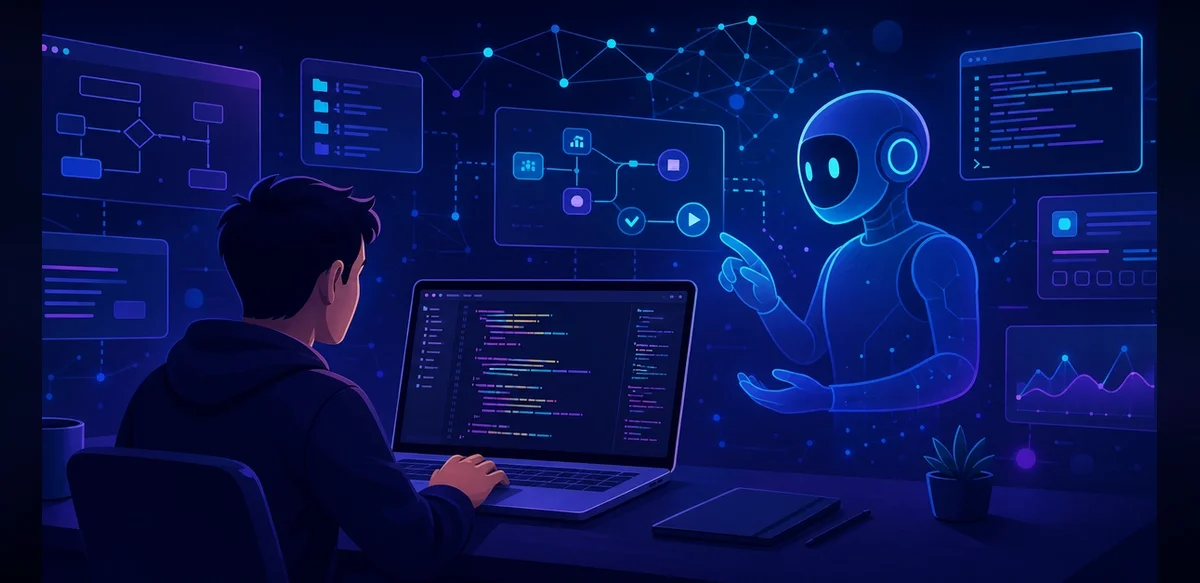
The evolution of software development tools has reached a notable stage with the emergence of coding agents that operate with greater independence than earlier assistants. This change alters workflows by allowing developers to shift focus from direct typing to oversight and direction of automated processes.
Traditional code assistants typically provide suggestions or complete small segments based on immediate input. In contrast, coding agents can manage larger tasks, maintain context across sessions, and execute sequences of actions with minimal ongoing guidance. Industry observers note that this progression builds on advances in artificial intelligence and machine learning techniques.
Developers adapting to these systems report benefits in productivity, particularly for repetitive or boilerplate code generation. However, the transition requires new skills in task delegation and output evaluation. Effective delegation begins with clear specification of requirements, including constraints, expected outcomes, and integration points with existing codebases.
Review processes also evolve under this model. Rather than examining line-by-line edits in real time, engineers assess completed modules for correctness, efficiency, and alignment with project standards. This approach demands robust testing frameworks and version control practices to track changes introduced by agents.
Practical guidance for teams includes starting with bounded tasks such as unit test creation or documentation updates before scaling to more complex features. Regular feedback loops help refine agent performance over time. Organizations implementing these tools emphasize the importance of maintaining human accountability for final deliverables.
Challenges remain in areas such as error handling and security considerations when agents interact with sensitive systems. Continued research into verification methods aims to address these issues. Overall, the shift encourages a reevaluation of developer roles toward higher-level architecture and strategic decision-making.
Further exploration of delegation strategies reveals patterns that improve outcomes. Defining success metrics upfront allows for objective assessment of agent contributions. Collaboration between human teams and automated systems appears most effective when roles are clearly delineated.
As adoption grows, training programs focused on these new competencies are emerging in educational and professional settings. The long-term implications for software engineering practices continue to unfold as tools mature.


