

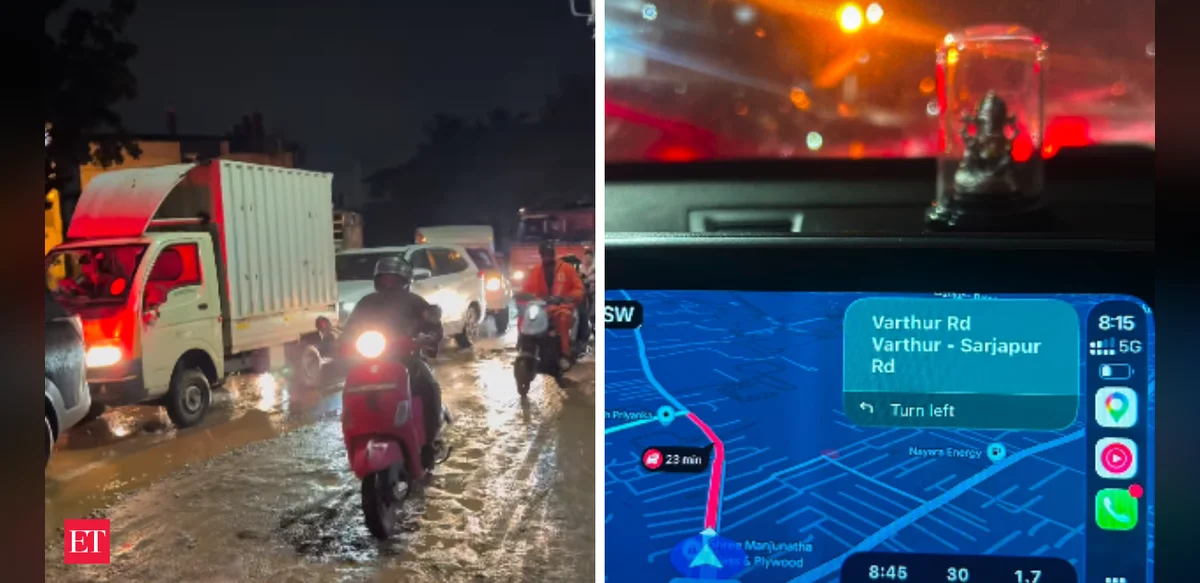
A Bengaluru resident recently posted footage capturing the intense congestion that affects many daily commutes in the city. What should have been a short three kilometer drive stretched into an hour and a half of slow progress. The individual eventually exited the vehicle and continued on foot after the delay became too prolonged. The post emphasized the practical difficulties this creates for everyday activities and commercial operations without assigning direct blame to municipal authorities.
Traffic conditions in Bengaluru have drawn attention for years due to rapid urban expansion and increasing vehicle numbers. The shared video showed lines of cars barely advancing along a major route during typical daytime hours. Observers noted that such delays can disrupt schedules for workers and delivery services alike. The resident expressed concern over how prolonged travel times might affect local enterprises that rely on timely movement of people and goods.
City planners have introduced various measures aimed at easing flow including new flyovers and improved signal systems. Despite these efforts many commuters report persistent issues during rush periods. The incident described in the video aligns with broader patterns seen across multiple neighborhoods where short distances require extended durations. Public discussions often focus on the need for better coordination between road maintenance projects and peak travel times.
Business owners in the area have voiced similar observations about how infrastructure limitations influence productivity. Meetings and client visits can be postponed when routes become impassable. The founder in question highlighted the operational strain without suggesting any single cause. Instead the emphasis remained on finding sustainable solutions that support both residents and economic activity.
Data from transport studies indicate that average speeds in core Bengaluru zones have declined over the past decade. Factors include population growth construction activity and limited public transit capacity during certain hours. Officials continue to monitor these trends and adjust policies accordingly. The video serves as one example among many that illustrate the daily reality for thousands of travelers.
Efforts to promote alternative commuting options such as carpooling and expanded metro lines are underway. These initiatives aim to reduce the number of private vehicles on key corridors. Community feedback plays a role in shaping future projects that address both immediate bottlenecks and long term capacity needs. The resident concluded the post by questioning the feasibility of efficient business functions under current conditions while calling for collaborative improvements.
Local forums have seen increased activity following the circulation of the footage. Participants share comparable experiences and suggest incremental changes like staggered work hours or enhanced pedestrian pathways. Such conversations contribute to ongoing dialogues between citizens and administrators. Maintaining neutral perspectives helps focus attention on measurable outcomes rather than isolated complaints.
Overall the episode underscores the interconnected nature of urban mobility and economic vitality. Short trips turning into lengthy ordeals can accumulate into significant time losses across a workforce. Continued investment in integrated transport networks remains a priority for sustaining growth in the region. Residents and entrepreneurs alike await further developments that could alleviate these recurring challenges.


