

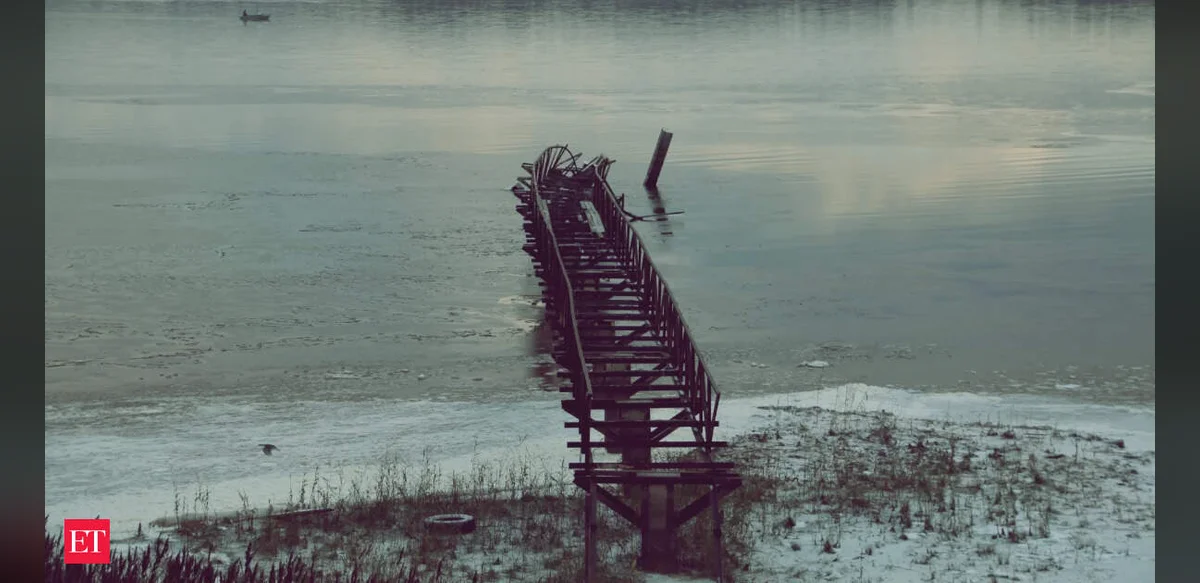
In the mid-twentieth century, a remote settlement located roughly four hundred twenty kilometers north of Moscow faced dramatic change due to large-scale water management initiatives. The town known as Vesyegonsk, established in the nineteenth century, saw approximately two-thirds of its territory inundated during reservoir construction in the nineteen forties. This development formed part of broader Soviet efforts to harness river systems for power generation and irrigation across vast regions.
Local residents encountered immediate challenges as rising waters threatened homes and infrastructure. Wooden buildings were carefully dismantled and moved to higher ground where possible, preserving some elements of the original community layout. In contrast, stone constructions proved impossible to relocate and were ultimately lost beneath the expanding reservoir. The process highlighted the difficulties of balancing industrial progress with preservation of historic sites.
World War Two added further complexity to the situation. With many men serving in the military, women assumed primary responsibility for daily operations, including relocation tasks and maintaining essential services amid the flooding. Their efforts ensured continuity for remaining inhabitants during a period of national crisis and resource scarcity.
Over subsequent decades, the reservoir transformed the local geography permanently. What had once been a thriving settlement became partially submerged, altering economic activities and population patterns. Survivors and descendants adapted by establishing new settlements nearby, though memories of the original town persisted through oral histories and limited documentation.
The episode reflects wider patterns of Soviet infrastructure projects that prioritized national development goals over individual communities. Similar reservoir schemes affected numerous locations throughout the country, often resulting in comparable trade-offs between modernization and heritage loss. Environmental consequences included changes to local ecosystems and water quality, topics that continue to draw attention from researchers today.
Contemporary accounts describe the emotional impact on residents forced to abandon ancestral properties. While some received compensation or assistance with relocation, others faced prolonged uncertainty. The event remains a notable example of how large engineering works intersected with everyday lives during a transformative era in Russian history.
Today, the submerged portions of Vesyegonsk lie beneath calm waters, occasionally visible during periods of low reservoir levels. Occasional archaeological interest arises when artifacts surface, offering glimpses into the pre-flood community. These findings contribute to ongoing discussions about balancing resource management with cultural preservation in similar projects worldwide.
The story of this town underscores the long-term effects of mid-century policies on regional landscapes and populations. It serves as a reminder of the human dimensions behind large-scale environmental modifications, where progress often came at significant personal cost for those directly involved.


