

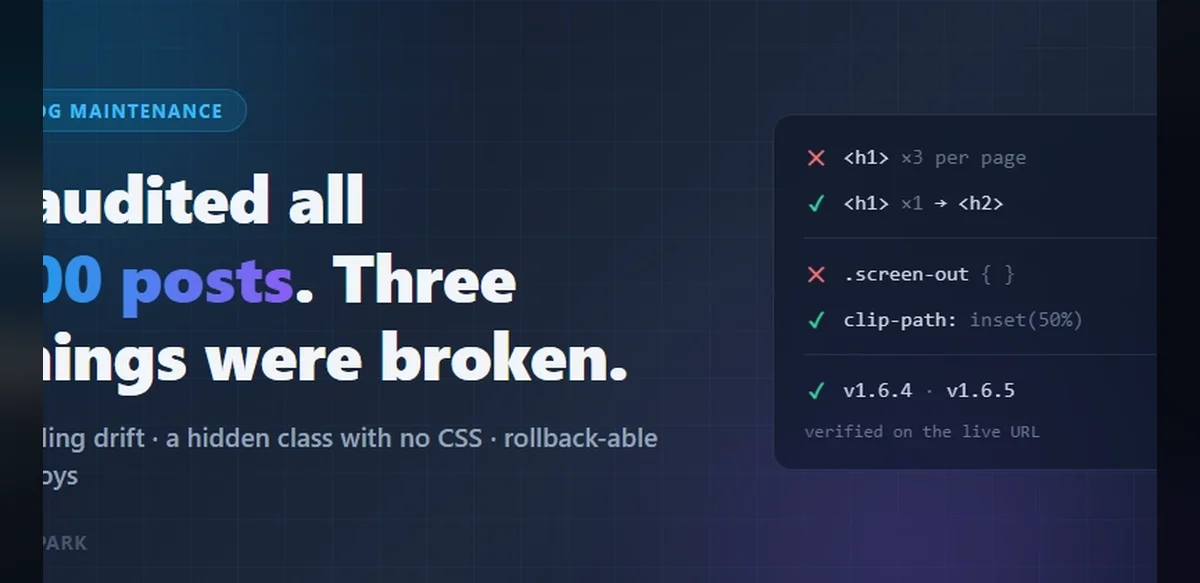
A long-running technical blog has undergone a full review after reaching two hundred posts. The author examined every entry for problems that had built up quietly over the years. The process revealed several categories of issues that affect readability, accuracy, and user experience.
Broken links appeared in many older articles. External resources had moved or disappeared, leaving readers unable to follow references. Internal links to related posts also pointed to outdated URLs in some cases. Fixing these required checking each link individually and updating or removing them where necessary.
Outdated technical details formed another major group of problems. Code examples no longer worked with current versions of software and libraries. Instructions for tools and frameworks needed revision to match present-day practices. The review highlighted how quickly technical information can become less useful without regular maintenance.
Formatting inconsistencies showed up across the archive. Some posts used different heading styles or image placement rules. Tables and code blocks displayed unevenly on mobile devices. Standardizing these elements improved the overall appearance and accessibility of the site.
Search engine optimization gaps were noted in several entries. Missing meta descriptions and inconsistent use of keywords reduced visibility for certain topics. The audit suggested adding structured data and improving title tags to help new readers find the content.
Comments sections contained outdated discussions that no longer applied to revised posts. Some threads referenced old versions of software or resolved issues. Moderation and updates to these sections helped keep conversations relevant.
Image files presented storage and performance concerns. Many high-resolution pictures had not been optimized, slowing page loads. The review recommended compressing assets and using modern formats to balance quality with speed.
The overall findings indicate that regular audits can prevent small problems from growing. Maintaining a large blog requires ongoing attention to links, code, design, and performance. The author plans to schedule similar reviews at regular intervals to keep the site reliable for readers.
Additional observations included missing alt text on older images and inconsistent tagging systems. These details affect both accessibility and navigation. Implementing a consistent tagging structure made it easier to group related posts.
The experience demonstrated the value of treating a blog as a living collection rather than a static archive. Each post benefits from periodic checks to ensure continued usefulness. Readers gain from accurate, accessible, and well-organized information.
Future updates will focus on automation where possible. Scripts can detect broken links and flag outdated code patterns. Human review remains essential for content accuracy and tone adjustments.
The audit process also prompted reflection on the blog’s overall direction. Some older series could be consolidated or expanded with new context. This approach helps maintain a coherent body of work as the site grows beyond two hundred posts.
Technical writers and site owners may find similar value in conducting their own reviews. Identifying patterns of decay allows targeted improvements rather than broad overhauls. The result is a more dependable resource for the audience.


