

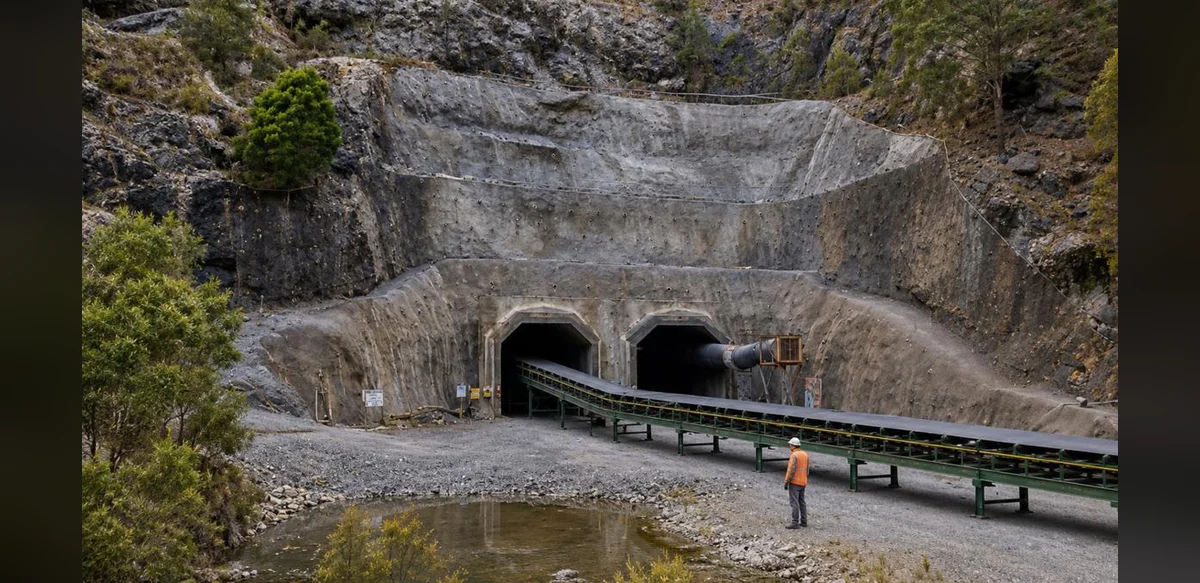
A resources company has begun work on an updated development strategy for its large-scale tin and tungsten asset located in Tasmania. The revised approach focuses on an underground layout intended to improve overall project economics. This adjustment comes at a time when market prices for the two metals remain elevated.
The project in question has long been viewed as a significant deposit of strategic minerals. By moving away from earlier surface-based concepts, the company aims to reduce surface disturbance while targeting higher-grade zones more efficiently. Officials have indicated that the underground method offers better potential to capture value from the resource base.
Market conditions have played a role in the timing of the redesign. Tin and tungsten prices have shown strength in recent periods, driven by supply constraints and steady industrial demand. The company appears to be positioning the asset to benefit from these trends through a more capital-efficient extraction model.
Tasmania has a long history of mining activity, and the site sits within an established mineral province. Shifting to underground operations aligns with efforts to minimize environmental footprint while maintaining production potential. Detailed engineering studies are expected to refine the new plan over the coming months.
Stakeholders will monitor how the updated concept affects project timelines and capital requirements. The company has emphasized that the change is designed to unlock greater returns without altering the core resource estimate. Further announcements are anticipated as technical work progresses.
Industry observers note that underground development can offer advantages in ore selectivity and waste management compared with open-pit alternatives. For this particular deposit, the approach may allow access to deeper portions of the mineralized zone that were previously considered marginal.
The broader context includes ongoing interest in critical minerals supply chains. Tin and tungsten both feature in various high-technology and industrial applications, supporting sustained price interest. The Tasmanian project could contribute to diversified sources outside traditional producing regions.
Company representatives have stated that the redesign reflects a focus on long-term viability. By adopting a smarter underground configuration, the operation seeks to balance cost control with resource recovery. This strategy is viewed as responsive to current market signals.
Additional details on the revised plan, including any updates to permitting or infrastructure needs, are expected in future disclosures. The project remains one of the more notable tin-tungsten opportunities in Australia, and the underground pivot marks a notable evolution in its development pathway.
Overall, the move underscores how project owners are adapting designs to match both geological realities and prevailing price environments. The emphasis on underground methods at the Tasmanian site illustrates a measured response to unlocking value from a substantial mineral asset.


