

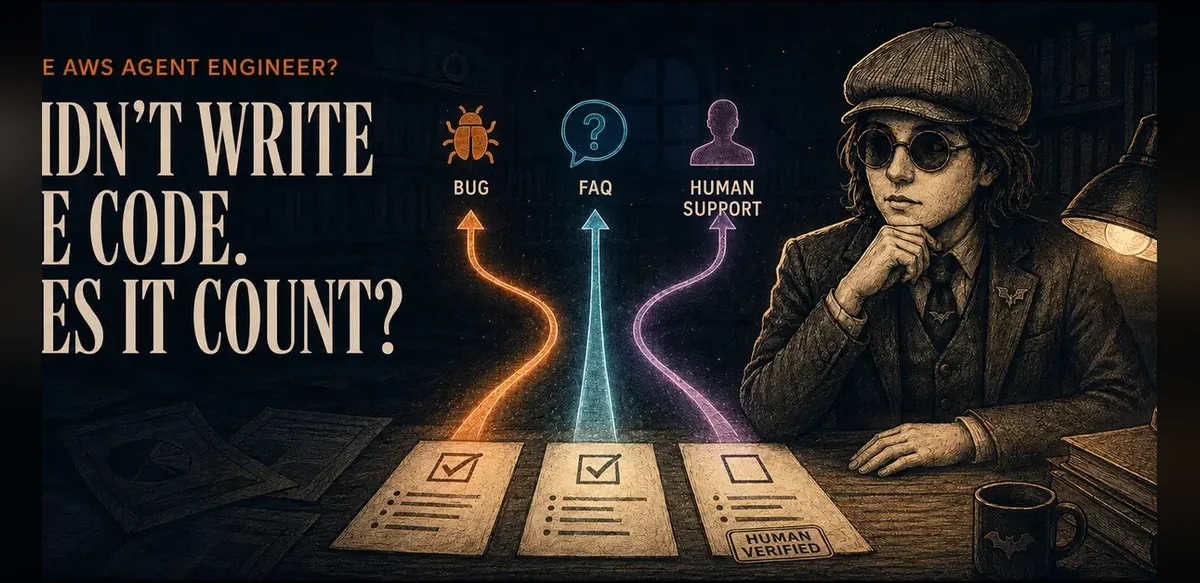
In recent discussions within technology education circles, a notable reflection has emerged regarding the role of artificial intelligence tools in completing academic and professional tasks. The individual in question had previously shared experiences with the ReAct framework during coursework, which prompted a moment of pause and reconsideration about the boundaries of personal contribution versus automated assistance.
This scenario highlights broader questions in the field of software development, particularly around roles involving cloud services such as those offered by major providers. Professionals and students alike are examining whether solutions generated with AI support fully represent individual achievement when pursuing positions that require demonstrated coding proficiency.
Educators in computer science programs have observed similar patterns as large language models become more integrated into daily workflows. These tools can produce functional code segments based on prompts, yet the underlying logic and problem-solving process may originate from the model rather than the user. Such developments raise considerations about assessment methods and what constitutes authentic skill demonstration.
Industry observers note that positions focused on building agent-based systems often demand a deep understanding of reasoning patterns and action sequences. When external systems handle portions of the implementation, it becomes essential to evaluate how much oversight and customization the engineer still provides. This balance affects hiring practices and the criteria used to verify readiness for complex projects.
The conversation extends to ethical dimensions as well. Transparency about the use of AI assistance during training or project work could become a standard expectation in technical fields. Without clear guidelines, discrepancies may arise between perceived and actual capabilities, potentially impacting team dynamics and project outcomes in collaborative environments.
Further analysis suggests that frameworks like ReAct, which combine reasoning steps with actionable outputs, serve as foundational elements in modern agent design. Exposure to these concepts through coursework provides valuable context, even if the code itself is not manually authored. The emphasis shifts toward comprehension of system behavior and the ability to refine or debug generated results.
As organizations continue to adopt automated development aids, training programs may need to incorporate modules on effective tool utilization alongside traditional programming instruction. This evolution could help ensure that future engineers maintain strong foundational knowledge while leveraging efficiency gains from available technologies.
Ultimately, the reflection serves as a prompt for ongoing dialogue about authorship, accountability, and the changing nature of technical expertise in an era of increasing automation. Stakeholders across academia and industry are encouraged to develop shared standards that recognize both human insight and the supportive role of intelligent systems.


