

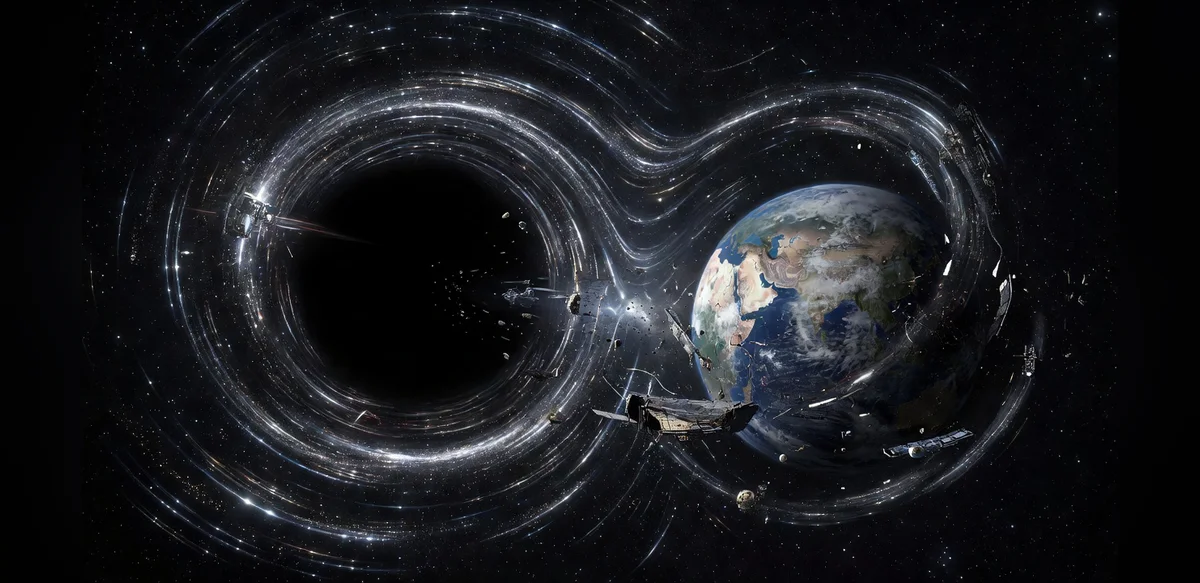
Scientists have long considered the unlikely scenario of a black hole passing near our planet. Recent discussions highlight how such an event might lead to serious economic disruptions worldwide. Although the probability remains extremely low, experts note that gravitational forces could interfere with critical infrastructure.
A black hole moving through the solar system would exert powerful tidal effects on Earth. These forces might destabilize satellite networks essential for global communications and financial transactions. Stock exchanges rely on precise timing and data links, so any interruption could trigger market volatility and losses.
Supply chains would face additional strain. Shipping and logistics depend on satellite navigation systems that could experience errors or outages. Ports and warehouses might struggle to coordinate shipments, resulting in delays for goods ranging from electronics to food products. Businesses could incur higher costs as they seek alternative routing methods.
Energy sectors would also feel the impact. Power grids connected through international monitoring systems might encounter synchronization problems. Utilities could face challenges in balancing supply and demand, potentially leading to temporary shortages in some regions. Manufacturing plants dependent on steady electricity would need to halt operations, affecting production quotas.
Financial institutions prepare for various risks, yet a black hole encounter presents unique challenges. Trading algorithms programmed for normal conditions might react unpredictably to sudden data gaps. Regulators could impose temporary halts on markets to prevent panic selling, though such measures might not fully contain broader uncertainty.
Insurance companies would likely see a surge in claims related to property damage from gravitational stresses on buildings or equipment. Policies covering business interruption could become central to recovery efforts. Reinsurers operating across borders might need to reassess risk models that currently exclude such rare cosmic events.
Governments would coordinate emergency responses focused on maintaining public order and essential services. Economic stimulus packages might be considered to support affected industries. International cooperation would prove vital, as no single nation could address the global scale of disruptions alone.
Long-term recovery would involve rebuilding damaged communication arrays and recalibrating navigation tools. Economists project that sectors like technology and transportation would require substantial investment to restore full functionality. Consumer confidence could decline if shortages persist, influencing spending patterns across multiple markets.
Research institutions continue to study black hole behavior to improve predictive capabilities. Better understanding of orbital dynamics might allow earlier warnings, giving economies more time to implement safeguards. Funding for such studies often comes from public and private sources interested in both scientific advancement and risk mitigation.
Public awareness campaigns could help individuals and companies prepare contingency plans. Diversifying supply sources and maintaining backup communication methods would reduce vulnerability. Educational programs in schools and workplaces might emphasize the importance of resilience against low-probability but high-impact events.
While the scenario remains speculative, it underscores connections between cosmic phenomena and terrestrial economics. Policymakers and business leaders benefit from considering a wide range of possibilities when developing strategies for future stability. Ongoing monitoring of space objects provides valuable data that supports both scientific inquiry and economic planning.


