

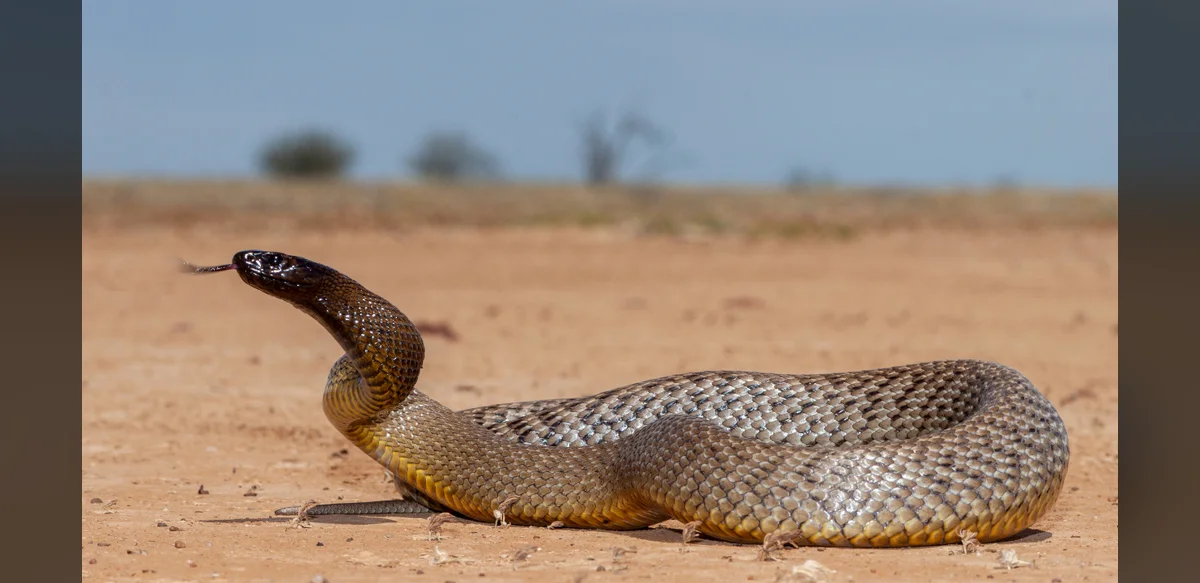
In 1950 a young photographer named Kevin Budden encountered a taipan snake during a trip in Australia. At just twenty years of age he suffered a severe bite that proved fatal despite immediate efforts to help him. While his condition worsened he specifically asked that the snake be kept alive and unharmed so its venom could be studied. This request was honored and the specimen was preserved for scientific purposes.
The venom obtained from the taipan later became the basis for an antivenom developed over the following years. In 1955 the treatment was used successfully to save the life of a boy named Bruce Stringer who had been bitten in Cairns. Medical records confirm that the antivenom reversed the effects of the bite and allowed the child to recover fully.
Budden’s final act ensured that valuable biological material reached researchers who could turn it into a practical medical tool. The resulting antivenom has remained in use for decades protecting people from the dangerous effects of taipan bites across affected regions. Health authorities continue to rely on similar preparations derived from the original research.
The sequence of events illustrates how a single decision made under extreme circumstances contributed to ongoing public health measures. Hospitals in northern Australia maintain stocks of the antivenom and train staff in its administration. Wildlife experts also note that preserving specimens rather than destroying them can support medical progress when handled safely.
Stories like this one are often cited in discussions about the intersection of personal sacrifice and scientific advancement. The case of the 1950 taipan encounter remains a documented example of how venom research translated into life saving treatment within five years. No other details have altered the core facts of the incident or its outcome.
Public health records emphasize the continued importance of antivenom programs in areas where taipans are found. Training for emergency responders includes protocols developed from early cases such as Budden’s. The preservation of the snake allowed precise venom analysis that would not have been possible otherwise.
Over time the antivenom has been refined yet its origins trace directly back to the specimen collected in 1950. Medical literature references the Cairns case as the first documented success with the new preparation. This established a foundation for further improvements in snakebite treatment across the country.
The legacy of the event lies in the practical application of the venom rather than in any change to the original circumstances. Researchers have since expanded studies on taipan venom but the initial contribution from that preserved specimen proved decisive. Communities in remote areas benefit from the availability of the treatment whenever bites occur.
Journalistic accounts of the period highlight the unusual nature of Budden’s request amid his own medical crisis. The focus remained on the factual outcome five years later when the antivenom reached a patient in need. No embellishments have been added to the established timeline or results.
Today the story serves as a reference point for discussions on ethical collection of biological samples during emergencies. It demonstrates that even in fatal encounters material can be secured for beneficial use under proper conditions. The antivenom continues to be produced and distributed based on the early research that began with the 1950 specimen.


