

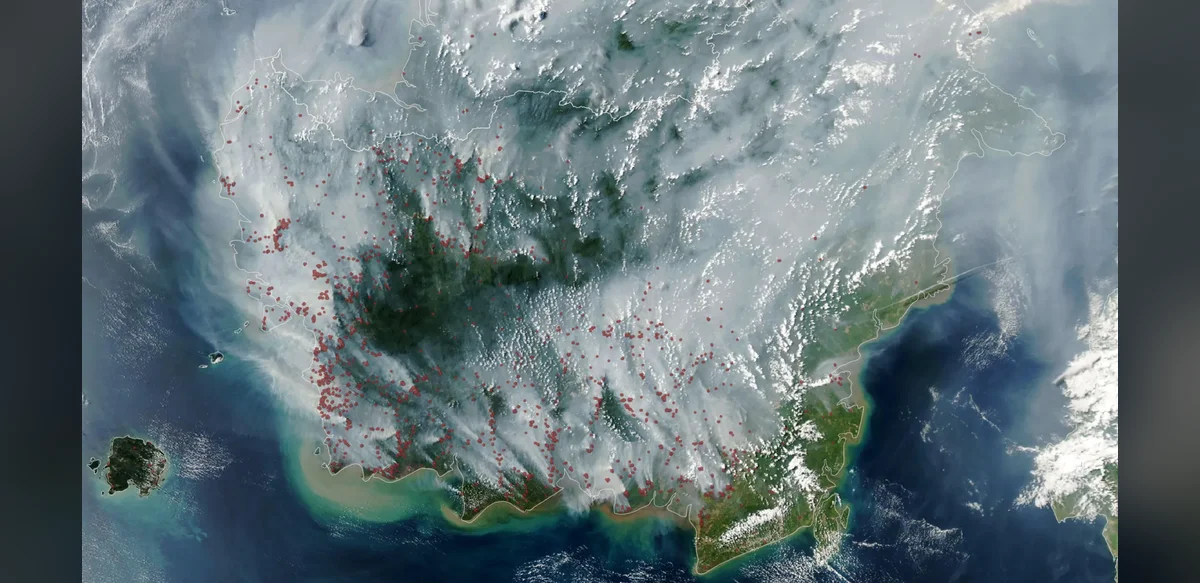
Indonesia is experiencing an unusually early increase in peatland fires this year, driven by a strengthening El Niño pattern and prolonged dry weather that has left wetlands vulnerable. These fires differ from typical surface blazes because they burn deep within the soil layers, allowing them to smolder for extended periods without detection.
Peat consists of partially decayed plant material that accumulates in waterlogged areas over centuries. When drought lowers water tables, this organic matter becomes highly flammable. Once ignited, the fires can continue underground for months, releasing substantial amounts of smoke and pollutants into the atmosphere.
Authorities have noted that the current season began weeks ahead of historical patterns. Satellite data shows numerous hotspots across several provinces, with many concentrated in regions known for extensive peat deposits. The combination of reduced rainfall and higher temperatures has accelerated the drying process, creating conditions favorable for ignition.
The environmental impact extends beyond immediate air quality concerns. Underground fires release large quantities of carbon that had been stored in the peat for long periods. This contributes to greenhouse gas concentrations and can affect regional climate dynamics over time.
Health officials are monitoring the situation closely due to the fine particulate matter produced by these fires. Such particles can travel long distances and penetrate deep into the lungs, posing risks especially to vulnerable populations. Communities near affected areas have reported increased respiratory issues as smoke spreads.
Efforts to control the fires include deploying teams to dig trenches and apply water where possible. However, the hidden nature of the blazes makes complete suppression difficult. Prevention measures focus on maintaining higher water levels in peatlands through canal blocking and other hydrological interventions.
International organizations have offered support for monitoring and response activities. Improved early warning systems using satellite imagery and ground sensors are being expanded to provide more timely alerts. These tools help identify emerging hotspots before they grow into larger events.
The economic consequences are also significant. Agricultural activities in surrounding areas can be disrupted, and tourism may decline when air quality deteriorates. Long-term restoration of damaged peatlands requires sustained investment and coordinated planning among government agencies and local stakeholders.
Experts emphasize that addressing the root causes involves both climate adaptation strategies and better land management practices. Reducing the frequency and intensity of these fires will depend on maintaining adequate moisture in peat ecosystems throughout the dry season.
As the El Niño influence continues, additional vigilance is required. Historical records indicate that similar weather patterns have led to severe fire episodes in the past, underscoring the need for proactive measures. Continued research into peat fire behavior will support more effective response protocols in future seasons.
Public awareness campaigns are underway to discourage activities that could spark fires, such as uncontrolled burning for land clearing. Community involvement plays a key role in early detection and reporting of suspicious smoke or heat sources.
Overall, the current developments highlight the complex interplay between weather patterns, land conditions, and fire management in Indonesia’s peat regions. Sustained attention to these factors remains essential for minimizing damage and protecting both the environment and public health.


