


India has achieved a significant milestone in its
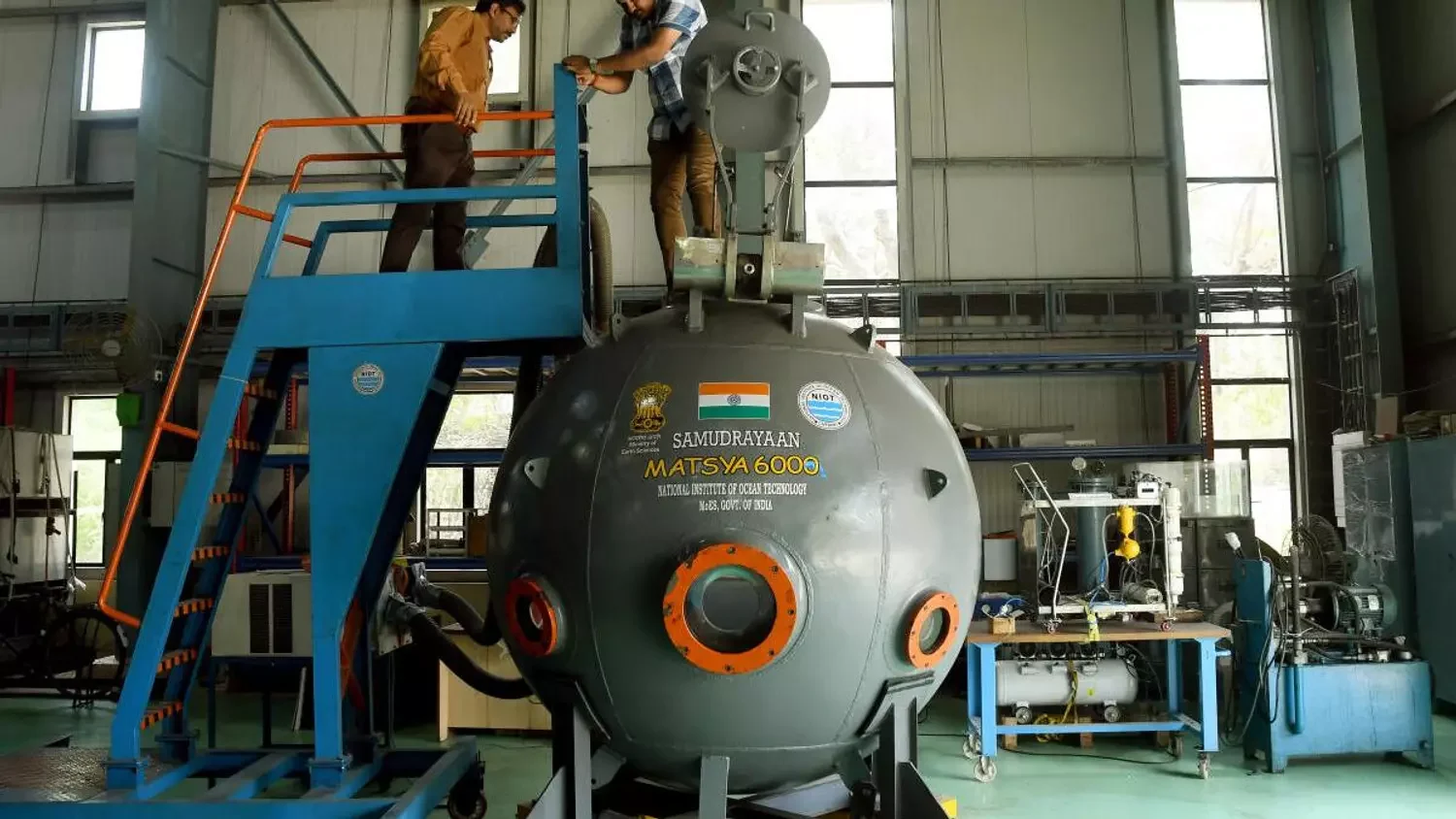
Deep Ocean Mission with successful deep-sea trials in the Indian Ocean, utilizing advanced technology for exploration, including underwater mining systems reaching depths of 5,270 meters. As part of the Samudrayaan Project, India is developing the MATSYA 6000 manned submersible, designed to take three people 6,000 meters deep by 2026-2027.
Key Developments and Trials
- Deep-Sea Locomotion Trials (5,270m): The National Institute of Ocean Technology (NIOT) successfully conducted deep-sea trials of the underwater mining system ‘Varaha’ at a depth of 5,270 meters in the Indian Ocean, paving the way for deep-sea resource extraction.
- AUV Exploration (5,271m): In December 2022, the Autonomous Underwater Vehicle (AUV) Ocean Mineral Explorer (OMe 6000) explored polymetallic nodule sites at a depth of 5,271 meters in the Central Indian Ocean Basin.
- Matsya-6000 Wet Tests (2025): The Matsya-6000 submersible completed initial wet tests at the Kattupalli Port facility in early 2025. It successfully conducted both dry and wet tests for propulsion, ballast, and communication systems.
- Upcoming Milestones: Shallow-water manned tests at 500 meters are planned for late 2025, with full 6,000-meter unmanned and manned deep-sea trials planned for 2026-2027.
About MATSYA 6000
- Purpose: To explore the deep sea for resources like polymetallic nodules (manganese, nickel, cobalt) and study marine biodiversity.
- Capabilities: A titanium-alloy spherical vessel capable of carrying three personnel to 6,000 meters, with an operational endurance of 12 hours (extendable to 96 hours in emergencies).
- Designers: Developed by NIOT (Chennai) in collaboration with ISRO’s Vikram Sarabhai Space Centre.
Strategic Significance
- Elite Group: With this capability, India joins an elite group of nations—USA, Russia, China, France, and Japan—possessing advanced crewed deep-sea submersibles.
- Blue Economy: The mission is a core part of India’s Rs 4,077 crore Deep Ocean Mission, aiming to harness sustainable resources to boost the Blue Economy.
- Energy Security: The exploration focuses on polymetallic nodules and gas hydrates, which are crucial for future energy security.

