


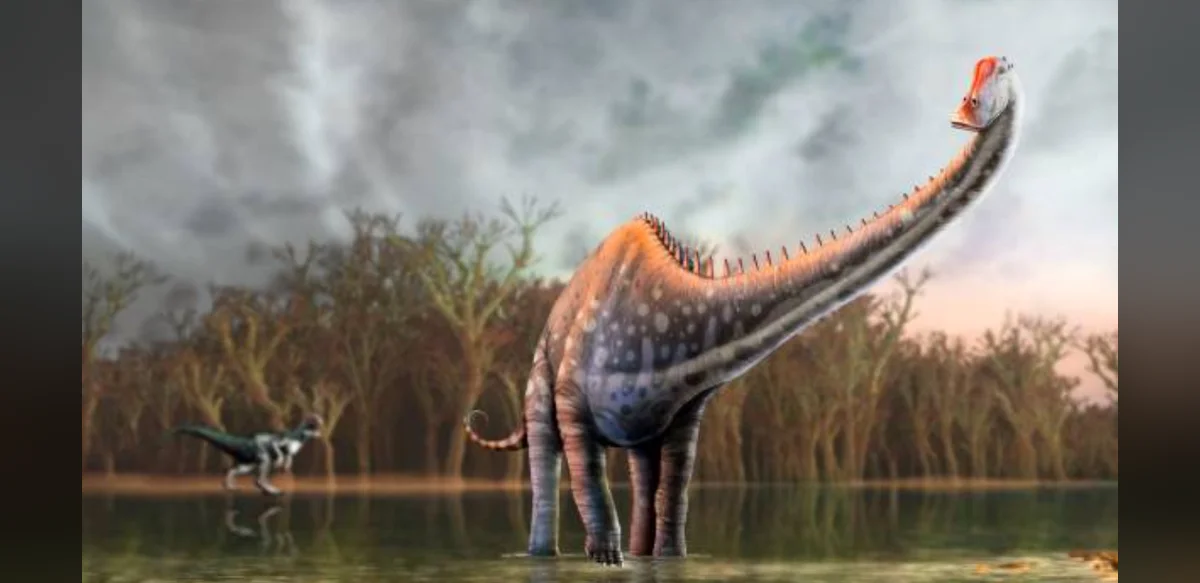
Paleontologists working in the region of Teruel in Spain have uncovered fourteen tail vertebrae belonging to a Diplodocus dinosaur. This marks the first time such fossils have been confirmed outside their previously known range in North America. The bones are estimated to be approximately 150 million years old and originate from the Late Jurassic period.
The find alters long-standing assumptions about the geographic distribution of this sauropod species. Until now, all verified Diplodocus remains had come exclusively from sites in North America. The Spanish discovery demonstrates that the animal or its close relatives also lived on the European continent during the same geological era.
Researchers note that the vertebrae were preserved in sedimentary layers that correspond to a time when global sea levels were lower than today. This environmental condition may have created temporary land connections between what are now separate continents. Such bridges would have allowed large herbivores like Diplodocus to move across regions that are currently separated by ocean waters.
The identification process involved detailed comparison of bone structure with known Diplodocus specimens from North America. Anatomical features such as the shape and size of the vertebrae matched established characteristics of the genus. This careful analysis ruled out other sauropod groups and confirmed the species assignment.
The discovery site in Teruel has yielded additional fossil material that helps place the find within its proper geological context. Layers surrounding the bones contain indicators of the environmental conditions present during the Late Jurassic. These indicators support the interpretation that sea-level changes influenced dinosaur movement patterns.
Scientists emphasize that the find does not suggest a large population of Diplodocus in Europe. Instead, it points to the possibility of occasional migration events when conditions permitted. Further study of the surrounding rock formations may reveal more about the extent of such movements.
The vertebrae themselves show signs of typical wear and preservation consistent with long-term burial in sediment. Their condition allowed researchers to document fine anatomical details that contribute to broader understanding of sauropod skeletal structure. This information adds to existing knowledge derived from North American specimens.
Ongoing work at the location continues to examine whether additional bones from the same individual or related animals are present. Any further discoveries could provide more complete insight into the animal’s presence in the region. The current evidence already establishes a new data point for mapping dinosaur distribution during the Jurassic.
The implications extend to models of continental connectivity in the Mesozoic era. Lowered sea levels are known to have occurred at various points in Earth’s history. The Spanish fossils offer concrete support for the idea that these changes affected terrestrial animal ranges.
Paleontologists involved in the project stress the importance of continued fieldwork in under-explored European sites. Many regions remain less studied than the well-known North American fossil beds. Discoveries such as this one highlight the potential for new findings that refine current scientific understanding.
The research team plans to publish detailed descriptions of the vertebrae in a scientific journal. Such publications will allow other experts to review the evidence and contribute additional interpretations. The process ensures that the significance of the find is thoroughly evaluated within the wider field of dinosaur studies.
In summary, the Teruel vertebrae represent a notable addition to the fossil record of Diplodocus. They shift the known range of the genus and provide supporting evidence for migration theories tied to ancient sea-level fluctuations. The discovery underscores the value of systematic excavation and comparative analysis in paleontology.


