


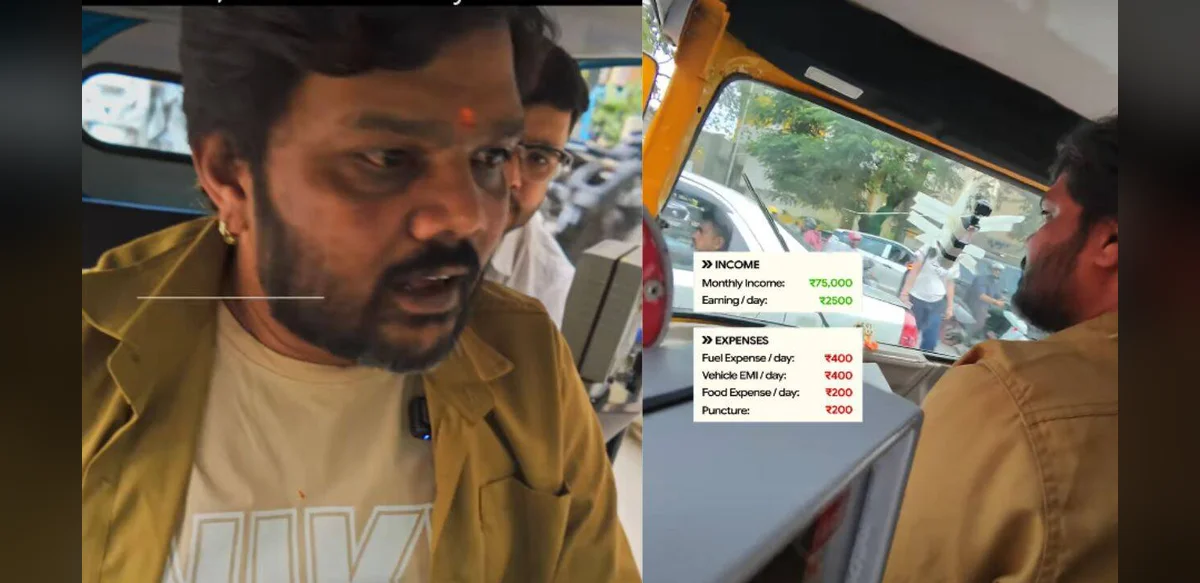
An auto rickshaw driver has publicly discussed his monthly earnings of approximately seventy five thousand rupees alongside the annual expenditure of one lakh forty thousand rupees dedicated to his daughter’s education. This disclosure has drawn attention to the ongoing challenges many working households encounter when balancing income with rising educational demands.
The driver explained that despite consistent earnings his household faces difficulties covering routine living expenses. He noted an absence of accumulated savings and occasional reliance on borrowed funds to bridge gaps in monthly budgets. Such circumstances reflect broader patterns observed among self employed individuals in urban areas where fixed costs continue to increase.
Education expenses represent a significant portion of the family’s outgoings. The annual commitment of one lakh forty thousand rupees covers tuition fees associated materials and related academic requirements. This level of investment underscores the priority placed on providing quality learning opportunities for the next generation even when personal financial reserves remain limited.
Observers have highlighted the tension between maintaining financial stability and supporting long term educational goals. Families in similar situations often navigate trade offs that affect daily consumption patterns and future planning. The driver’s account illustrates how variable income streams can complicate efforts to build emergency funds or pursue additional skill development.
Public responses to the shared information have focused on the determination shown in prioritizing schooling amid economic constraints. Commentators have pointed out that many households across different regions experience comparable pressures as educational costs rise faster than average wages in certain sectors.
The situation also brings into focus the role of accessible financing options for middle income and lower income groups. Without substantial savings individuals may turn to informal lending networks or structured repayment plans to meet immediate needs. This approach can provide short term relief yet carries implications for overall household debt levels over time.
Discussions around such personal finance stories frequently emphasize the importance of financial literacy programs tailored to self employed workers. Understanding budgeting techniques and available government schemes could assist families in optimizing their resources more effectively.
In addition the narrative touches upon the evolving expectations placed on parents regarding their children’s academic achievements. As competition for higher education opportunities intensifies investments in schooling become viewed as essential rather than optional expenditures.
Community support systems including local welfare initiatives and educational subsidies may offer partial solutions for families facing similar dilemmas. Awareness of these resources remains uneven however leading some households to manage independently without external assistance.
Overall the account serves as a reminder of the delicate equilibrium required to sustain both current living standards and future oriented investments. Working individuals continue to adapt their strategies in response to fluctuating economic conditions while maintaining focus on intergenerational progress through education.
Further examination of income expenditure patterns among transport sector workers could provide additional insights into sustainable financial practices. Policy measures aimed at stabilizing earnings or reducing educational costs might alleviate some of the documented strains.
The driver’s experience resonates with numerous accounts from across the country where modest incomes intersect with substantial aspirational spending. Continued dialogue on these topics may encourage more comprehensive approaches to household economic resilience.


