


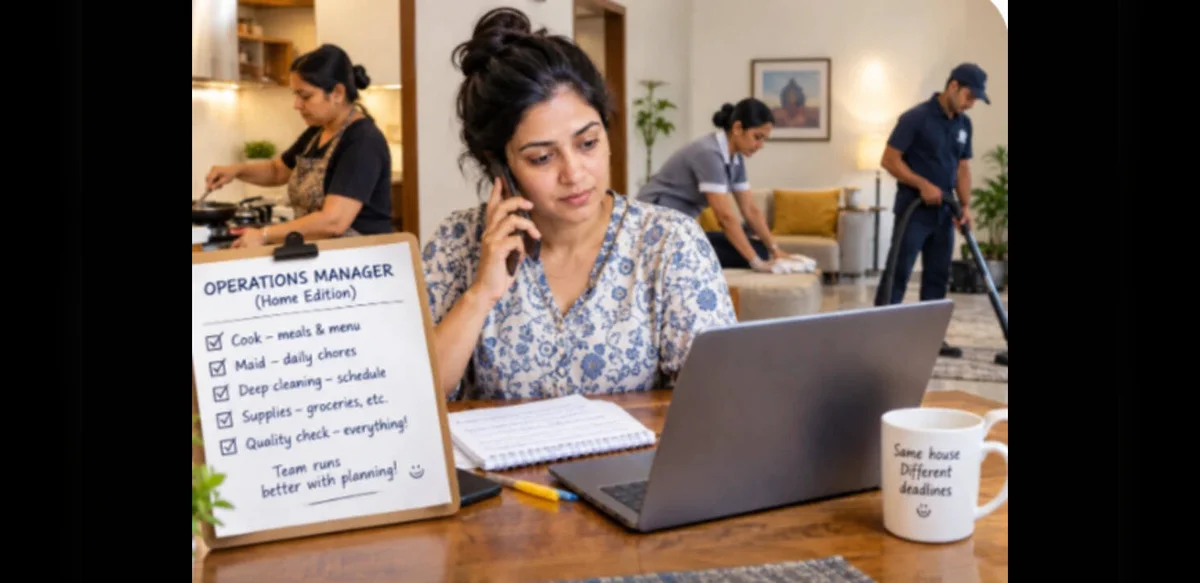
An overseas Indian has shared observations about the daily responsibilities his spouse manages while living in India. According to his account, the presence of paid domestic workers does not remove the need for active supervision and coordination.
The man, who lives abroad, noted that his wife functions much like an operations manager. She schedules and directs the cook, the maid, and additional cleaning personnel. Tasks include meal planning, supply tracking, quality checks, and ensuring that deep cleaning occurs on a regular basis. These duties require consistent attention even when helpers are employed.
Many families in India rely on domestic assistance for routine chores. Yet the statement points out that hiring staff introduces its own layer of management. Someone must verify that work meets expected standards, handle payments, resolve minor issues, and adjust schedules when staff members are unavailable. This coordination can occupy several hours each week.
Observers familiar with similar households often describe comparable experiences. A spouse remaining in India may spend time training new workers, maintaining inventories of groceries and cleaning supplies, and communicating expectations clearly. These activities add to the overall workload beyond the physical labor performed by the helpers themselves.
The comment has prompted discussion among other non-resident Indians and their families. Some note that cultural expectations around hospitality and cleanliness increase the pressure on the person at home. Others emphasize the importance of clear communication between partners living in different countries to avoid misunderstandings about daily life.
Household management in such situations frequently involves balancing multiple roles. The individual at home may also handle school-related matters, medical appointments, and interactions with extended family. Domestic staff can reduce certain physical tasks, yet the oversight role remains.
Experts in family dynamics suggest that recognizing this effort can improve mutual understanding between partners separated by distance. They recommend regular conversations about responsibilities and occasional adjustments to support systems. In some cases, technology such as shared lists or video calls helps bridge gaps in awareness.
The original remark underscores a broader point: domestic help is a tool rather than a complete solution. Effective use of that tool still demands planning, follow-up, and accountability. Families that acknowledge this reality may find it easier to maintain harmony across borders.
Similar accounts appear periodically on social platforms where overseas Indians discuss life back home. Themes often include the cost of services, reliability of workers, and the emotional labor involved in keeping a household running smoothly. These conversations reflect ongoing changes in urban Indian family structures as more people pursue opportunities abroad.
While individual circumstances vary, the core message remains consistent. Managing a home with assistance still requires active participation from at least one adult. The title of operations manager, though informal, captures the organizational demands that persist regardless of hired support.
Readers responding to the post have shared both agreement and additional context. Some describe dividing tasks differently when both partners are present. Others highlight regional differences in availability and expectations of domestic workers across Indian cities. Such exchanges illustrate the diversity of experiences within the broader diaspora community.
Overall, the account serves as a reminder that household operations involve more than the visible chores. Behind each clean room or prepared meal lies a sequence of decisions and checks that keep the system functioning. For families with one partner abroad, understanding these layers can strengthen long-distance relationships and reduce assumptions about ease or difficulty.
As migration patterns continue, more households may encounter similar dynamics. Clear recognition of the management component can help set realistic expectations and foster appreciation for the work performed at home.


