


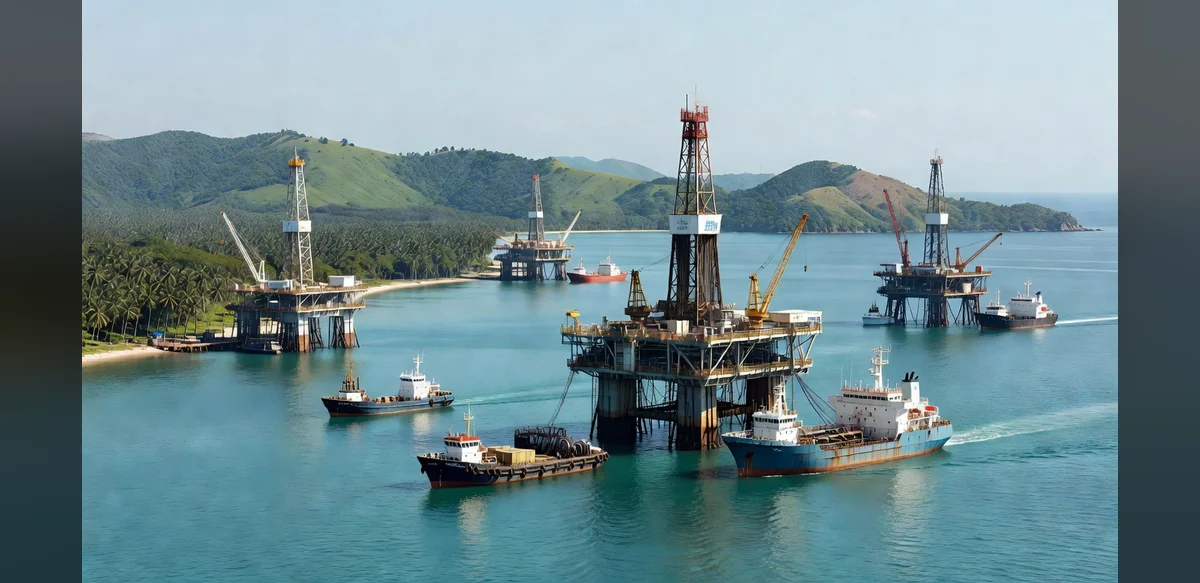
Recent developments have positioned South America as a primary focus for major energy companies seeking new reserves. Activity across the continent has accelerated notably following a significant find in one coastal nation.
The shift began after a major discovery off the coast of Guyana. This event drew widespread attention from international firms, prompting increased investment in surveying and drilling operations throughout the region. Companies have since expanded their efforts, viewing the area as holding substantial untapped potential.
Exploration efforts now encompass multiple sites along the northern and eastern coasts. Seismic surveys and test wells have become more frequent as operators assess geological formations similar to those that yielded earlier successes. The pace of these activities reflects a broader strategy to secure long-term supplies amid global demand patterns.
Local governments have responded by updating regulatory frameworks to accommodate incoming projects. Licensing rounds have attracted competitive bids, with participants highlighting the continent’s favorable conditions for large-scale operations. Infrastructure improvements, including ports and support facilities, are underway to handle the growing volume of work.
Industry observers note that the momentum could influence economic planning in several nations. Revenue from successful projects may support public spending in areas such as transportation and education. At the same time, authorities emphasize the need for environmental safeguards during all phases of development.
Challenges remain, including logistical hurdles in remote locations and the requirement for specialized equipment. Firms are addressing these through partnerships and technology transfers that build local capacity. Training programs have been introduced to prepare workers for roles in the expanding sector.
The overall trend underscores a renewed interest in conventional resources within established basins. While global attention often centers on other regions, South America’s recent track record has altered perceptions among decision-makers. Continued monitoring of results from ongoing wells will determine the extent of future commitments.
Analysts project that sustained activity could reshape trade dynamics for energy products originating from the continent. Export routes are being evaluated to connect new production sites with international markets efficiently. This process involves coordination between private operators and public agencies to ensure compliance with safety standards.
In summary, the continent’s emergence stems directly from demonstrated geological promise. The initial breakthrough has catalyzed a wave of follow-on investments that continue to unfold. Stakeholders across the value chain are adapting to capitalize on these opportunities while managing associated risks.
Further updates on specific project milestones are expected as data from current campaigns becomes available. The focus remains on responsible advancement that balances economic gains with resource stewardship.


