

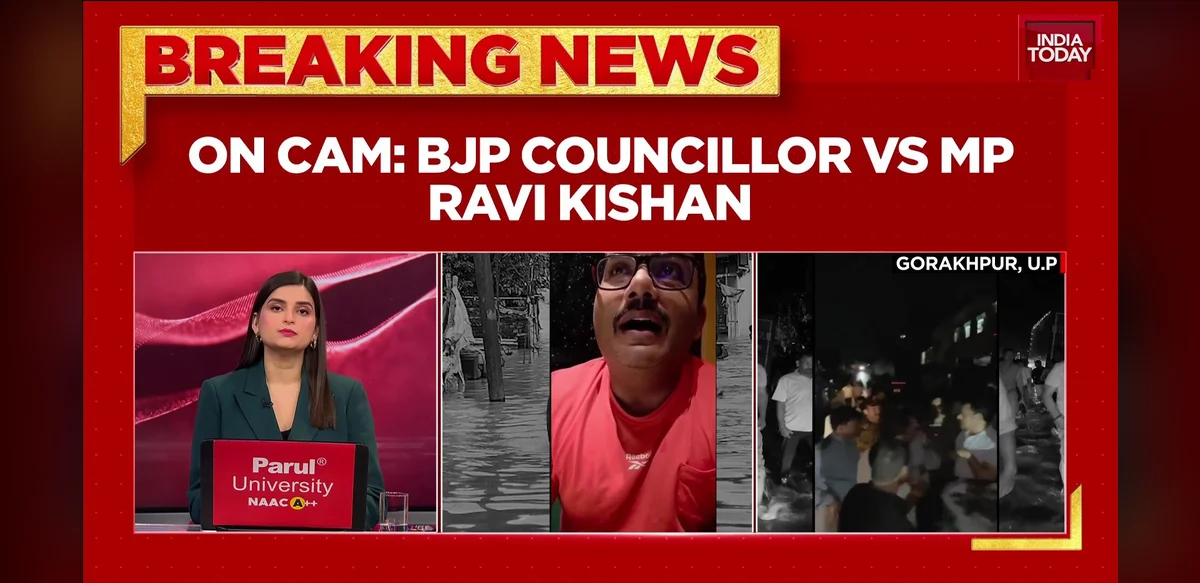
Heavy rainfall has led to significant waterlogging across several neighborhoods in Gorakhpur, prompting renewed political friction within the Bharatiya Janata Party. Local residents have reported disruptions to daily life, with roads submerged and drainage systems overwhelmed in multiple wards. The situation has drawn attention to ongoing infrastructure challenges in the region.
A video clip featuring a BJP parliamentarian from the area has resurfaced online, in which he referenced conditions in Spain while discussing local civic issues. The remark, originally made during a public interaction, has been cited by critics within the party as insensitive amid the current flooding complaints. Party workers and local representatives have exchanged statements on social media, highlighting differing views on how to address the water accumulation.
Municipal authorities have deployed teams to clear blocked drains and pump out excess water from affected zones. Officials stated that continuous rain over the past several days has exceeded the capacity of existing stormwater infrastructure. Residents in low-lying areas described difficulties in accessing schools, markets, and workplaces.
Senior party leaders have called for a coordinated response, urging both elected representatives and civic bodies to focus on immediate relief measures. Discussions are underway regarding long-term solutions such as improved drainage networks and urban planning adjustments. The episode has also prompted questions about accountability at the local governance level.
Opposition voices have used the opportunity to question the ruling party’s handling of monsoon preparedness. Meanwhile, BJP functionaries maintain that the waterlogging stems from exceptional weather patterns rather than systemic shortcomings. The resurfaced comment has added a layer of internal debate, with some members advocating for more measured public communication.
Local reports indicate that several colonies remain partially inundated, with temporary relief camps set up in community halls. Health officials are monitoring for potential waterborne illnesses. The administration has appealed to citizens to avoid unnecessary travel and to report persistent flooding spots.
This incident underscores broader challenges faced by many Indian cities during the monsoon season, where rapid urbanization often outpaces drainage upgrades. Experts suggest that integrated water management strategies could mitigate future occurrences. Political observers note that such local issues can influence party dynamics ahead of upcoming electoral cycles.
Efforts to restore normalcy continue, with additional pumps and personnel mobilized. The episode serves as a reminder of the need for sustained investment in civic amenities. Party leadership is expected to review the matter in the coming days to prevent similar internal disagreements.
Residents have expressed hope that the attention generated will translate into tangible improvements. Community groups are organizing clean-up drives in collaboration with municipal staff. The focus remains on restoring access and ensuring public safety until waters recede fully.


