

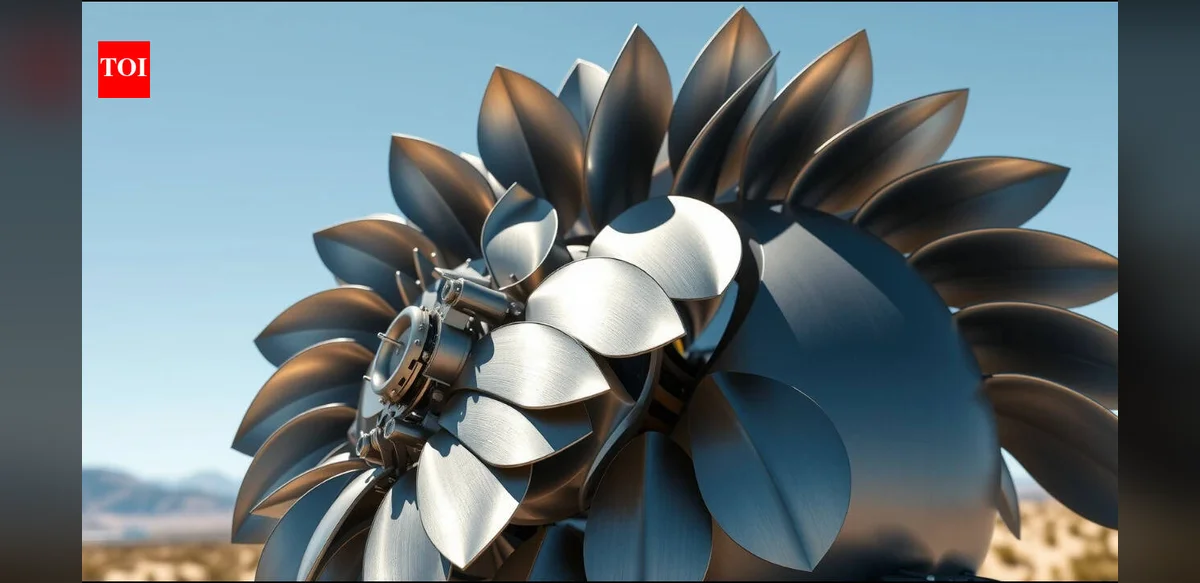
Researchers based in China have created an innovative radiative cooling device modeled after the natural sun-tracking behavior of sunflowers. The design allows the system to adjust its orientation throughout the day, optimizing exposure to the sky for heat dissipation. In controlled tests, this dynamic approach produced a cooling flux 135 percent higher at solar noon than a comparable static horizontal emitter using the same materials.
The technology focuses on passive cooling methods that release heat into the atmosphere without consuming electricity. Traditional fixed panels often face limitations because their sky view changes with the sun’s position, reducing efficiency during peak daylight hours. By incorporating movement similar to a sunflower following light, the new setup maintains a more consistent view of the sky dome, enhancing thermal radiation.
Experiments compared the moving version directly against an identical but stationary unit. Measurements taken at midday showed the adaptive system delivered substantially greater cooling power. This improvement stems from better alignment with the atmosphere’s thermal window, where infrared energy escapes more effectively.
The project emphasizes simplicity in construction while achieving notable performance gains. Components include a selective emitter surface that reflects sunlight yet allows infrared emission, mounted on a mechanism that rotates to follow solar angles. Such features make the concept potentially suitable for building integration or industrial applications where energy-free temperature control is desired.
Further analysis indicated that the gains were most pronounced under clear skies and high solar angles. At other times of day, the difference narrowed but remained positive overall. The team documented these results through repeated trials to ensure consistency across varying weather conditions.
This development adds to ongoing efforts in sustainable thermal management. Passive radiative cooling has attracted interest for reducing reliance on mechanical air conditioning, which consumes significant power in warm climates. An adaptive design could extend the practical hours of effective cooling beyond what fixed installations achieve.
Challenges remain in scaling the system for widespread use. Durability of moving parts, maintenance needs, and cost considerations will require additional study. Nonetheless, the reported midday improvement highlights the value of biomimetic approaches in engineering.
The work demonstrates how observation of natural phenomena can inform technical solutions. Sunflowers optimize light capture through heliotropism; applying a similar principle here optimizes heat rejection instead. Continued refinement may lead to versions tailored for different latitudes or building types.
Overall, the findings suggest that dynamic sky view management offers measurable benefits for radiative cooling. Future investigations could explore combinations with other passive strategies or materials to further enhance output. The core result of 135 percent greater cooling at solar noon provides a clear benchmark for evaluating similar innovations.


